
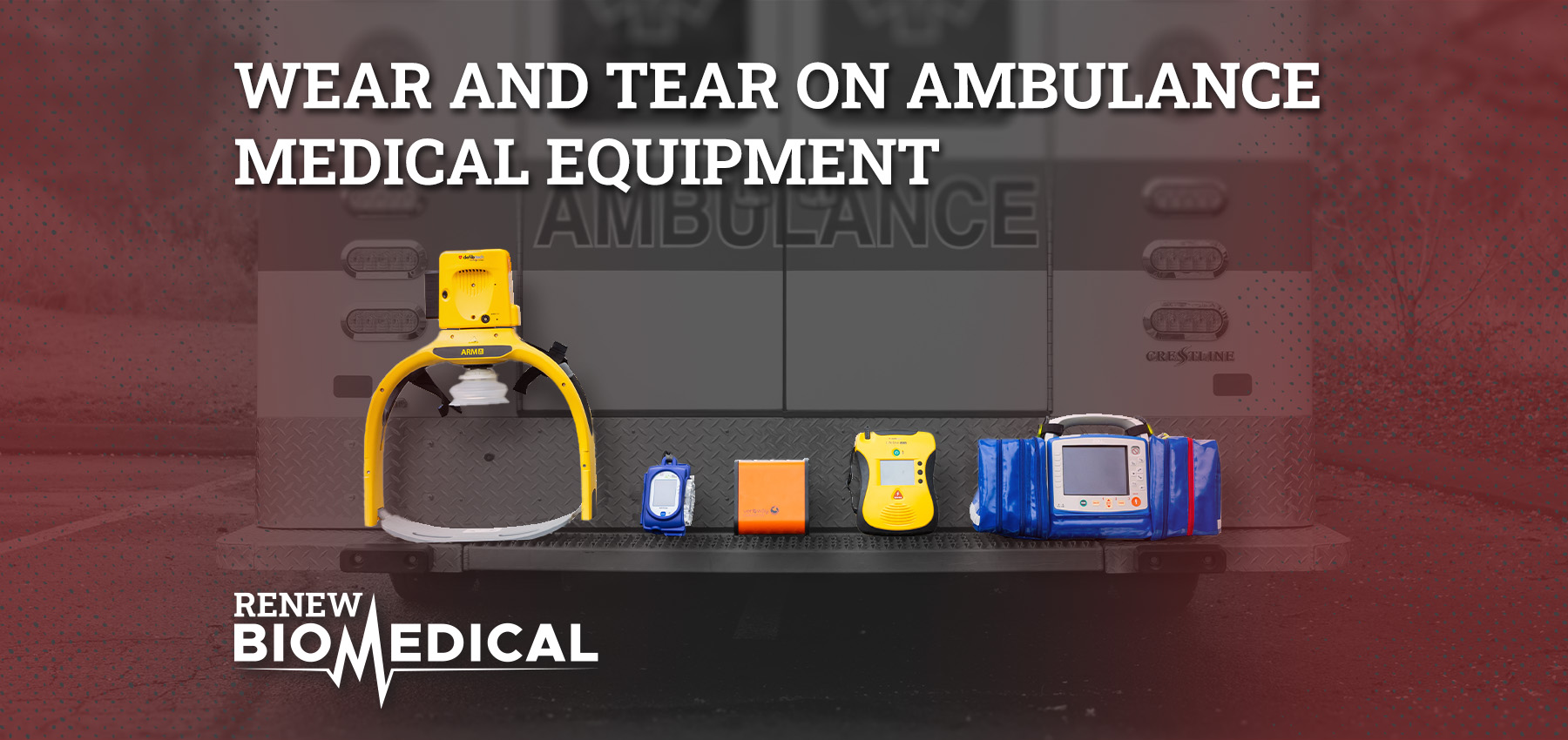
Ambulance equipment is built for demanding environments. It must be rugged enough to continue working through bumpy hospital transports, temperature fluctuations, and contaminants like dust and moisture. The nature of emergency work puts a lot of wear and tear on ambulances and the equipment they carry. Knowing what causes wear and how to keep equipment functioning properly is essential because emergency medical equipment is counted on to save lives in high-stakes, time-sensitive environments.
What Causes Wear on Ambulance Medical Equipment?
Medical equipment that is carried in an ambulance to emergencies has a much harder life than equipment in more controlled clinical environments, like a hospital. Ambulance equipment is constantly subjected to movement and vibration from rapid transports and to the variables of real-world environments. When a piece of equipment, such as an infusion pump, constantly absorbs vibrations inside a moving ambulance from speed, bumps, and turns, external housings and internal connections can be worn down and damaged. Repeated drops or impacts cause internal component dislodgment and structural damage in a patient monitor. Oxygen equipment and ventilators can be harmed by environmental factors like moisture and dust, which cause major equipment issues like rust, short circuits, overheating, clogging, and electrostatic discharge. Extreme heat or cold can cause defibrillator batteries to drain or to overheat. Even the most durable equipment can take a significant beating over time. These causes of damage are all things that regularly occur in an ambulance and at the sites of emergencies.
How to Spot Warning Signs of Damage
Being aware of what damage looks like is one important way to catch and address equipment issues before they become bigger problems. Here are some common warning signs to keep in mind:
- Battery issues: Problems like unexpected shutdowns, rapid charge depletion, and overheating can indicate that a device’s battery has been damaged or is failing.
- Damaged cables: Exposed internal wires and cracked insulation are signs of cable damage and can lead to severe electrical and operational hazards, including shock.
- Intermittent errors: Error codes or alarms on medical devices suggest underlying issues.
- Inaccurate readings: Accuracy is vital in medical devices, so devices that produce inconsistent or inaccurate readings require immediate repair.
What to do to Prevent Damage
Being intentional to care for your equipment is crucial to prolong its life and avoid damage. Catching equipment issues before they become a problem is essential. When you notice a warning sign of damage, get it checked out rather than subjecting your device to further strain that may cause further issues. Actions such as controlling humidity, removing excessive water, and properly cleaning and unplugging equipment can make a big difference in its long term functionality. Prioritizing routine inspections and scheduled preventative maintenance is also critical and is the best way to find and proactively address equipment issues. ReNew Biomedical’s field service team delivers on-site support to keep your medical equipment operating safely and efficiently. We offer preventive maintenance, electrical safety testing, equipment calibrations, unit evaluations, and equipment diagnostics, all at your own facility. Contact ReNew to learn more or to schedule service today.