Need help? 866-468-9558

AEDS FOR SPORTS/OUTDOORS

Your Athletes’ Safety is the Top Priority
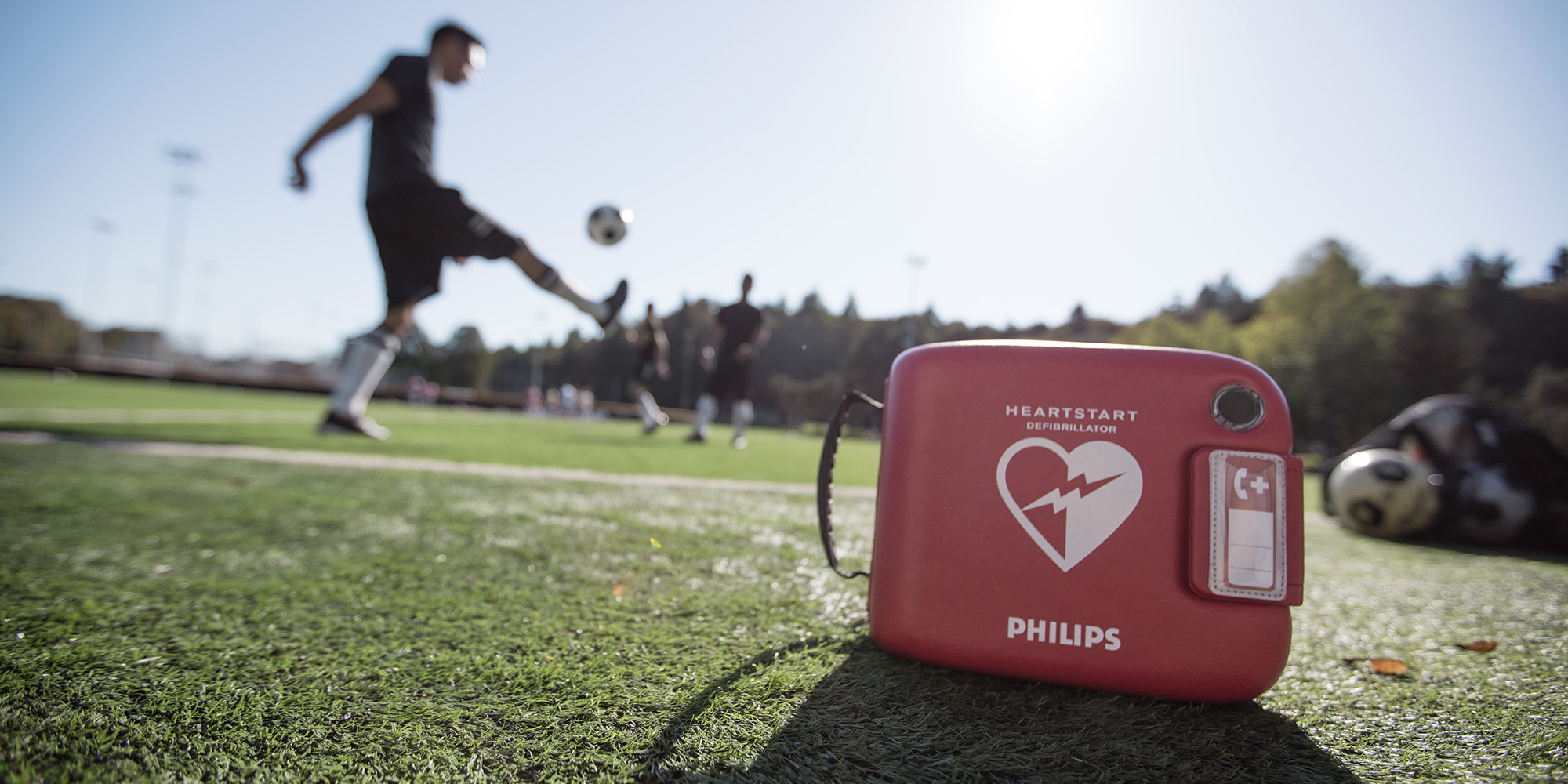
Sudden cardiac arrest (SCA) takes the lives of over 366,000 people annually. Sudden cardiac arrest can strike anyone of any age, anywhere, at any time, without warning. Most of these cardiac arrests take place outside of the hospital, often happening in athletic settings or around outdoor events such as sporting events, practices, parks, hikes, and festivals. Without immediate emergency response, victims of cardiac arrest only have minutes to live. For every minute that goes by without a defibrillating shock from an AED, their chance of survival drops by 10%.

  • SCA is the leading cause of death on school campuses
  • SCA is the leading cause of death for student-athletes
  • On average, SCA tragically takes the lives of between 7,000-10,000 American youth every year
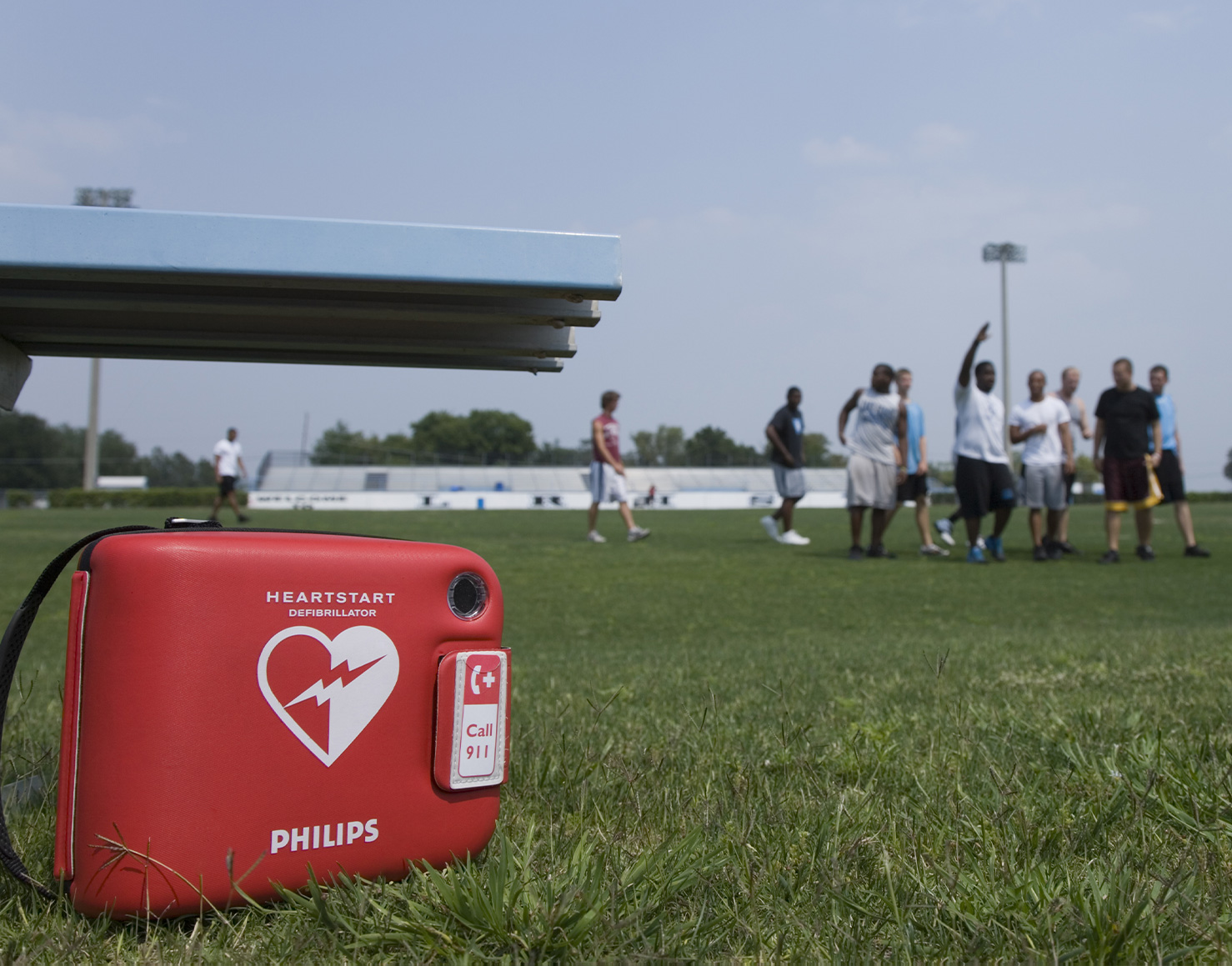
FRx-AED-sports-outdoors

A Simple Life-Saving Solution

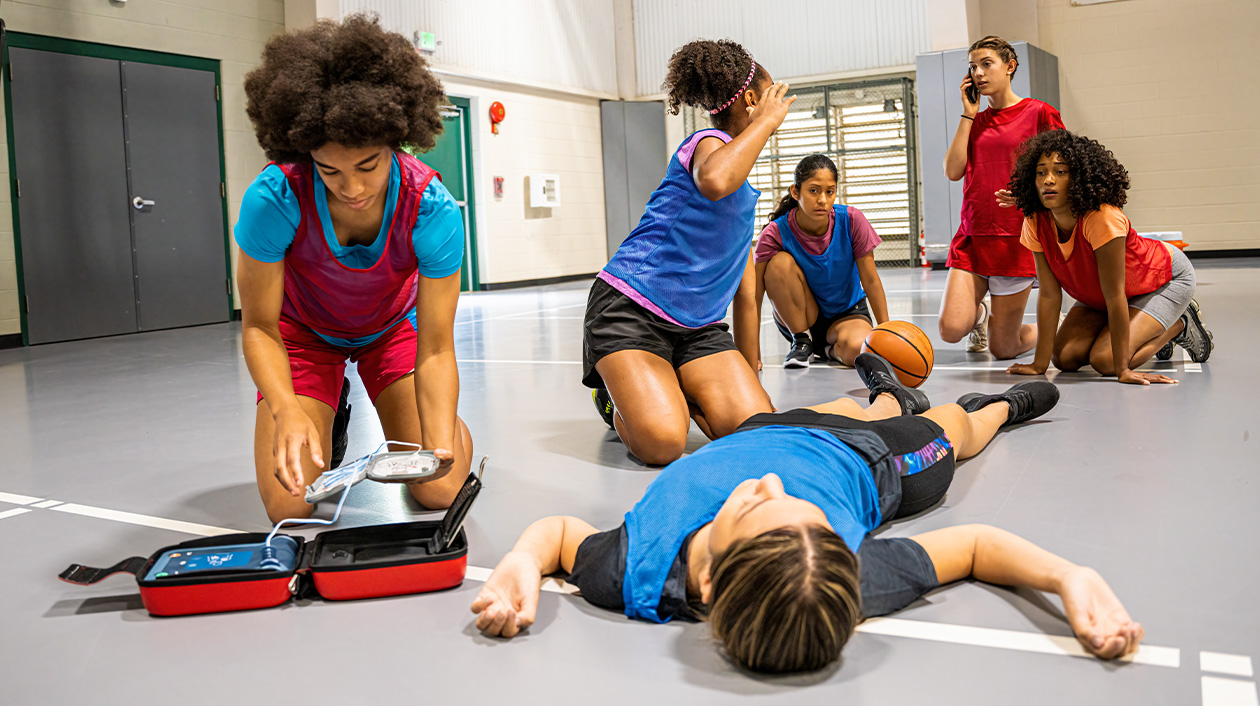
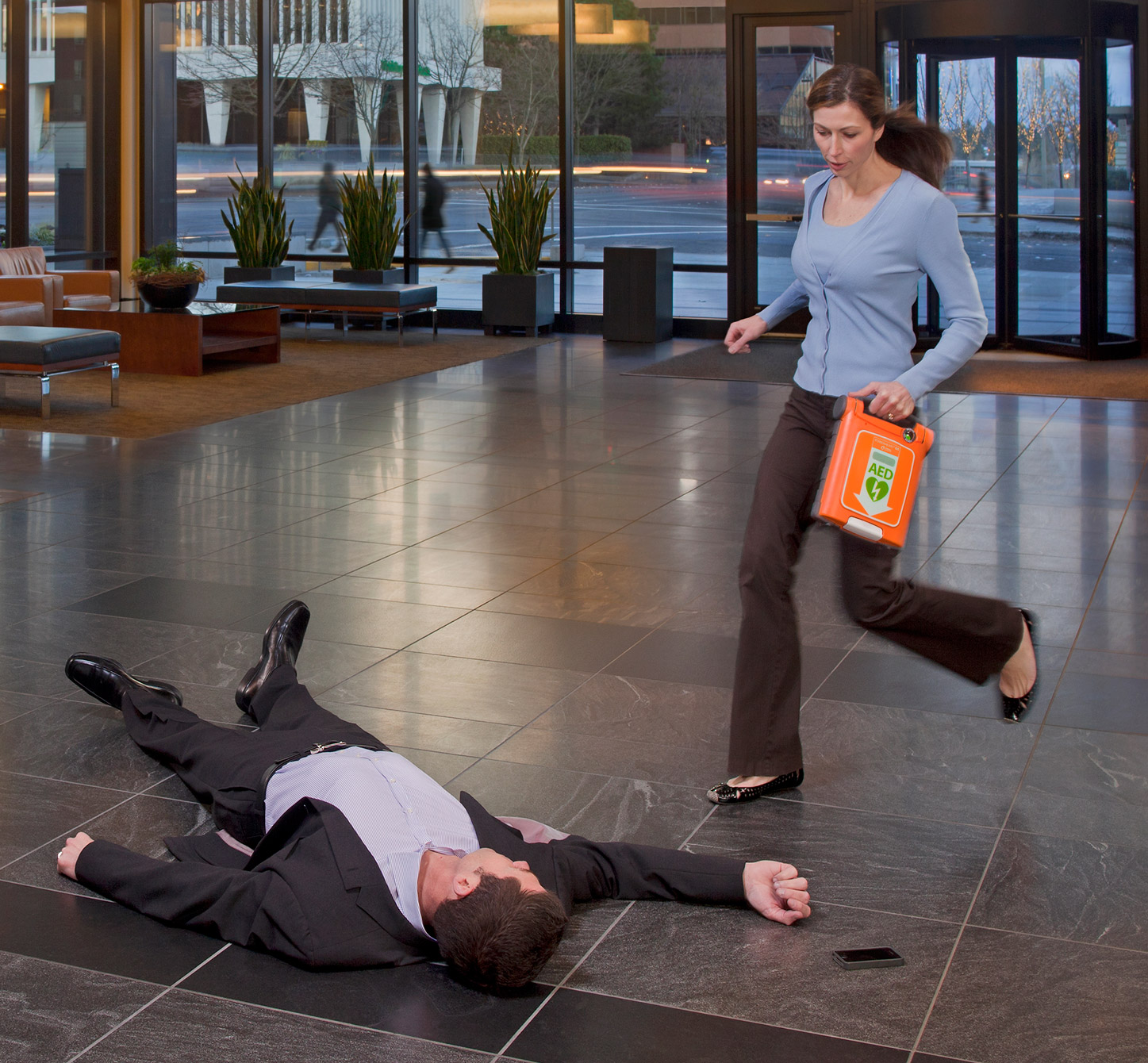
Cardiac arrest can strike any coach, student, athlete, parent, or bystander without warning. Sudden Cardiac Arrest is caused by an irregular rhythm of electrical activity in the heart, and can only be treated with an electric shock called defibrillation from an Automated External Defibrillator (AED). AEDs are designed to be an easy-to-use and cost-effective solution.
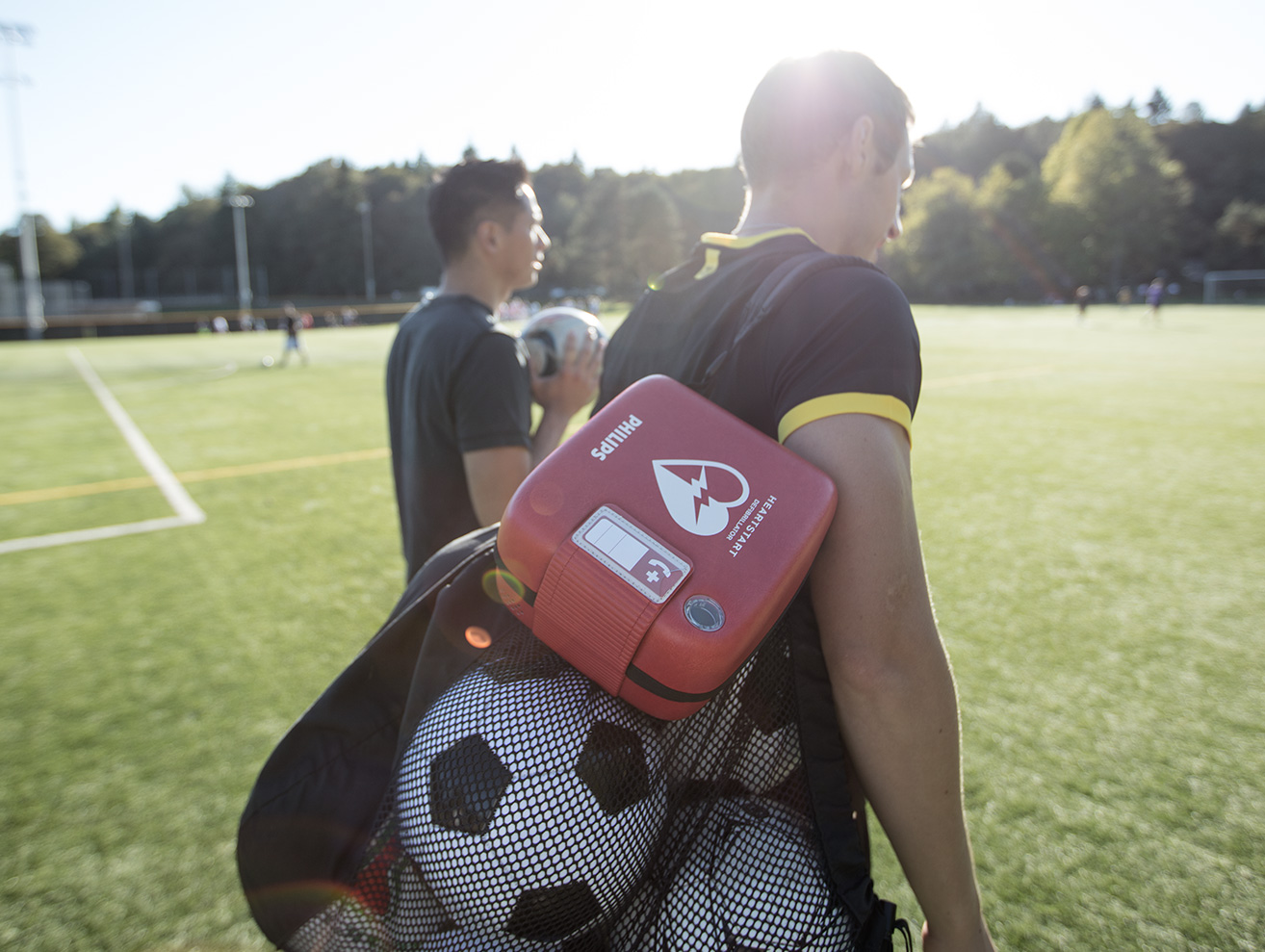
AED-Frx-SCA-sports-soccer

There are several ways to dramatically improve the odds of survival for your players, fans, parents, and visitors.

1: Keep an AED

These devices are easy for any player, parent, coach, or event staff to use in a high-stress situation. AEDs should be easily accessible in your facility or park, spaced appropriately according to your accessibility. For FAQs and more info about AED placements in your facility, AED, see our guide below.

2: Learn CPR

Train your coaches, athletes, and parents on cardiopulmonary resuscitation, a method of manually compressing the chest to maintain blood flow and oxygen throughout the victim’s body. Getting your team and coaching staff CPR-Certified is easy and affordable. Educating your event staff or your players on CPR can be a great method of team bonding, teaching lessons about what’s important off the field. Even better, knowledge and familiarity with CPR also equips them with the skill and ability to save lives in their local community or homes, if needed.

Preparing for AEDs in Sports

AEDs come in all shapes and sizes but all are designed to be used by either an untrained bystander or a trained medical professional to deliver a life-saving shock in a critical situation. For athletic organizations and outdoor parks, we recommend the Zoll AED Plus, Cardiac Science G5, or the FRx AED from Philips. These new AED packages have a low long-term cost of ownership and come with many features ideal for athletic settings:

  • New AED, Rescue-Ready out of the box
  • Durable unit
  • Simple interface, designed with ease-of-use in mind
  • Pediatric Pads or Key available to easily switch to a child-safe shock level
  • A timed metronome guides rescuers on CPR tempo
  • Industry-leading battery life (industry standard: 2 years)
  • Eight-year manufacturer warranty (longest in the industry)
  • Daily, weekly, and monthly self-tests for easy maintenance
  • AED wall sign available
  • First Aid Kit available

Emergency Response Plan

An Emergency Response Plan (ERP) lays out the exact steps you should take if a player, athlete, coach, parent, or bystander has a SCA. The ERP should note the steps of emergency response as well as the locations of AEDs around your facility. Your ERP should be reviewed annually, made available to all coaches and parents, and should include:

  • The creation of a Cardiac Emergency Response Team (CERT)
  • The steps to activate the CERT team, notifying the local EMS, and handoff once paramedics arrive
  • AED placement(s) within the facility and AED maintenance schedule
  • Budgetary consideration for replacing old units, adding units to account for expansion/quicker response, annual AED maintenance, and replacing expired pads/batteries
  • Cardiac arrest response drills
AED-in-Sports-SCA

Featured AEDS

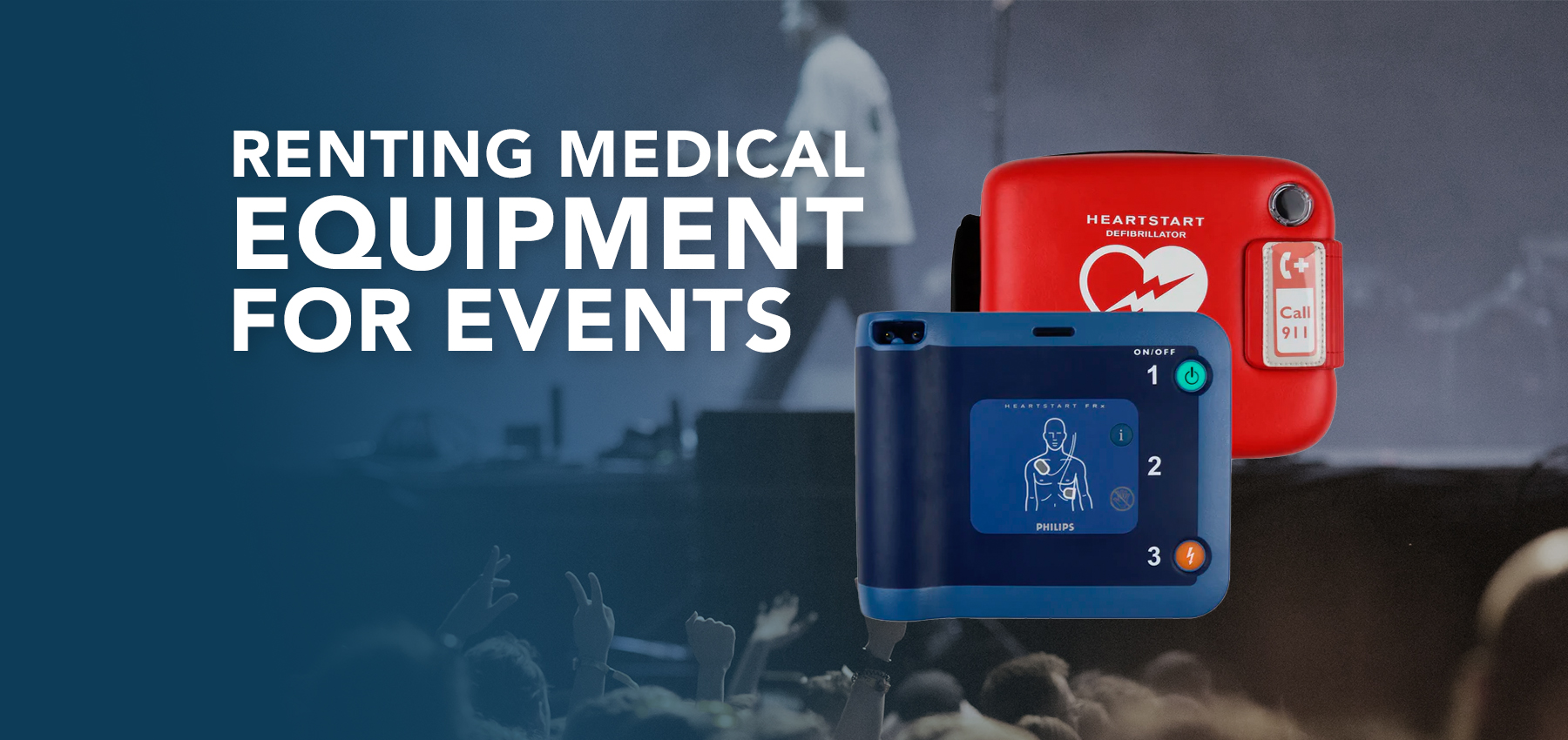
HEARTSTART FRX AED

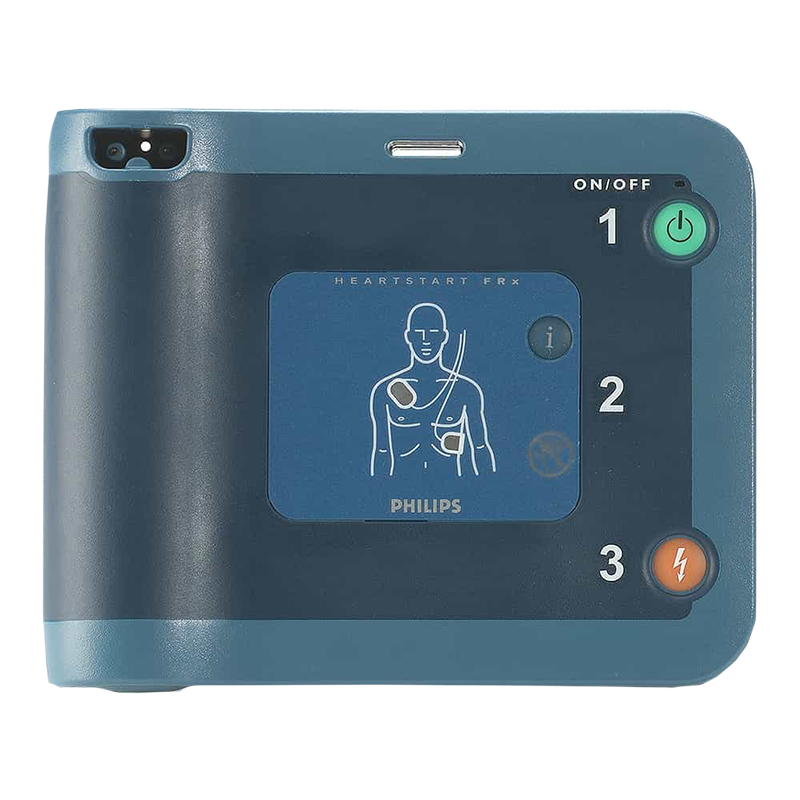
The Philips FRx AED is a lightweight, tough, reliable device providing step-by-step voice instructions, CPR guidance and SMART biphasic shock technology. Optional pediatric key not included. The FRx is designed for ease-of-use and longevity
Learn More
AED Plus Defibrillator - ZOLL
Zoll-AED-Plus-Bundle-

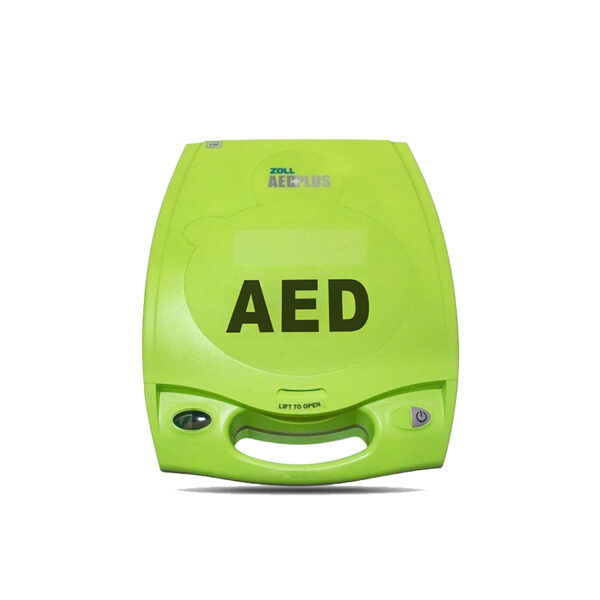
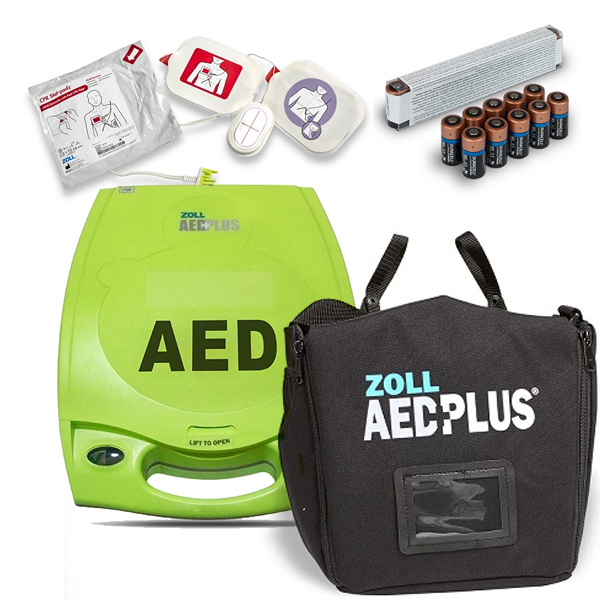
ZOLL AED PLUS

The ZOLL AED Plus sets a new standard for ease of use in emergency situations, delivering voice, text, and visual prompts alongside real-time CPR feedback. The AED Plus supports rescuers with Real CPR Help®, a robust design, and low ten-year cost of ownership.
Learn More

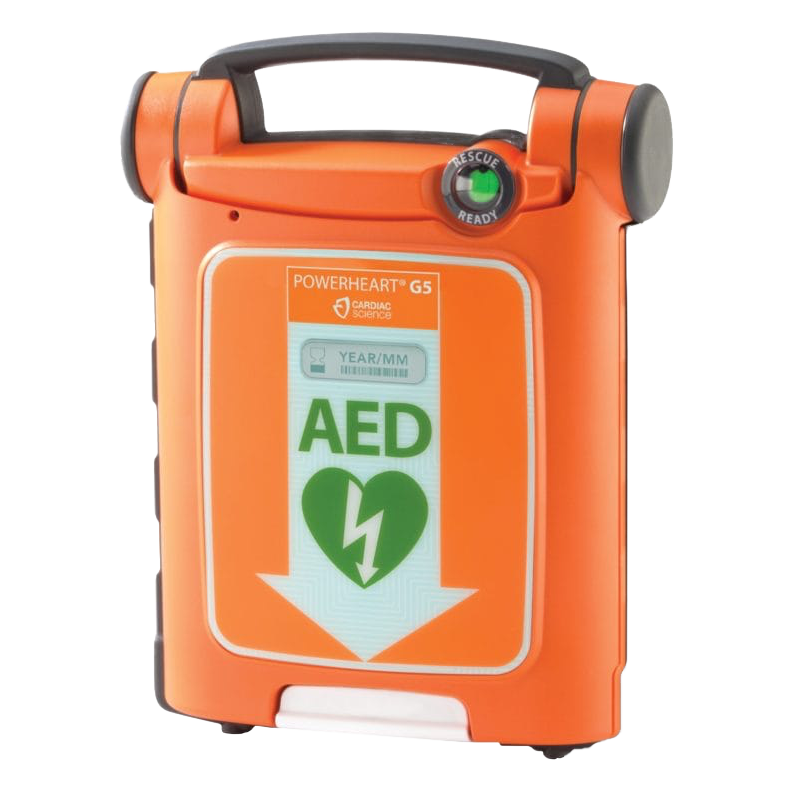
POWERHEART G5 AED

The Powerheart G5 AED from Cardiac Science boasts user-friendly features like dual-language functionality, clear voice and texts instructions, and variable escalating energy. The G5’s rugged reliability and smart technology ensures readiness, all backed by an 8-year warranty.
Learn More
Cardiac Science Powerheart G3 AED Defibrillator
Public-Access-G3Bundle Optimized

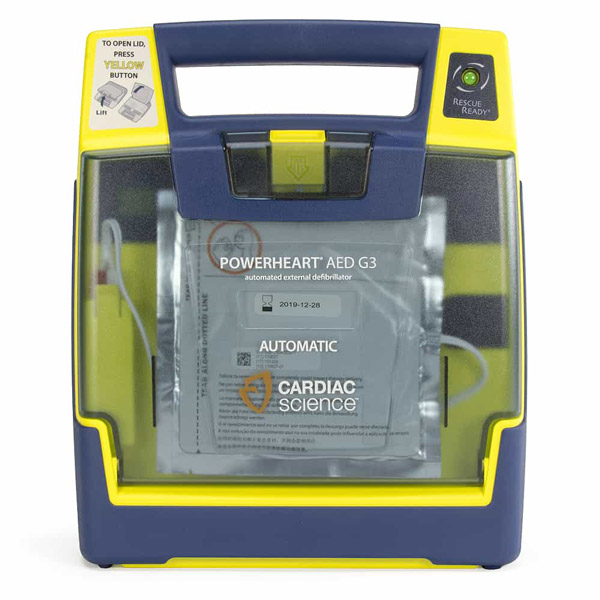
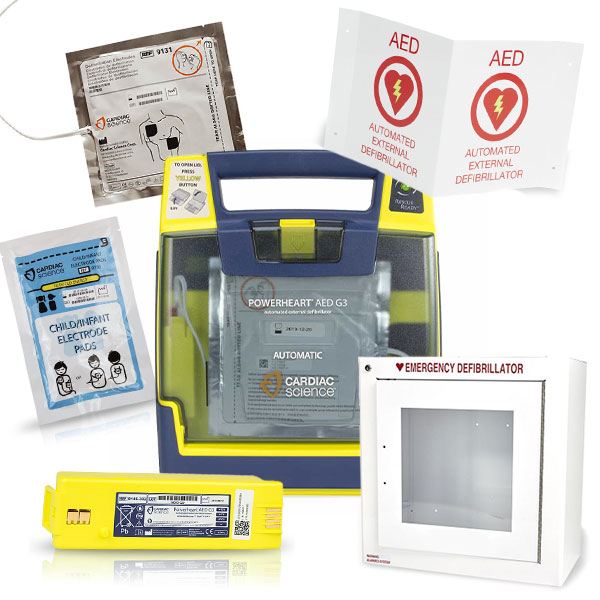
POWERHEART G3 AED

The Cardiac Science PowerHeart G3 AED, available in semi-automatic or fully automatic models, is equipped with STAR® biphasic waveform, voice and text prompts, and status indicators. The G3 is designed for clarity during critical moments.
Learn More

Frequently Asked Questions about AEDs in Sports

Does my athletic organization require an AED?

Some states require an AED for sports organizations, sports complexes, and schools. Many more states are even requiring AEDs in public gathering places such as fitness centers, gyms, and public parks. However, even if your state does not require it, keeping an AED nearby during any type of athletic event is absolutely critical. Cardiac arrest can be triggered by physical activity or direct impacts to the chest, which can occur even in non-contact sports. Sudden cardiac arrest doesn’t only affect the elderly; SCA is actually the #1 killer of student athletes.

What’s the best AED for my athletic program or park?

For athletic organizations, sports teams, athletic trainers, and parks, we recommend the Zoll AED Plus, Cardiac Science G5, and the Philips FRx AED. These AEDs are durable and can survive outdoor placements in a wall cabinet or even the wear and tear of a coach’s bag. The price of a new unit is an investment, but the industry-leading warranty, long lifetime of pads and battery life means the low cost-of-ownership pays off quickly.

How do I afford an AED for my sports organization?

AED cost can be a barrier for many parks, schools, trainers, and athletic facilities. But studies show keeping an AED can improve survival rates by over 7x, saving thousands of lives every year in the US. Strategies for funding the purchase of AEDs for your team, park, or athletic facility include

  • Pursuing grants from local children’s safety organizations or Heart Health organizations. There are many foundations around the U.S. whose primary focus is helping schools, parks, and youth athletic programs afford AEDs and teach CPR.
  • Look for help from local Rotary Clubs, many of which make tangible local investments in schools
  • Partner with local retail stores and set up a donation program at checkout
  • Many local health systems/hospitals help fund school AED programs
  • Hold a local fundraising event, and teach the importance of CPR and quick response in a cardiac emergency

How many AEDs should my facility have?

For every minute that passes after an SCA without a defibrillating shock, survival odds decrease by 10%. Because time is so precious, AEDs should never be more than three minutes away from any given point.The exact number of AEDs in a facility depends on several factors, including the shape and layout of your park and/or buildings and how many athletic fields are on the premises. In many parks with multiple fields, spread out locations, hiking trails, thousands of seats, or large land areas, one AED is just not enough. Time how fast it is to retrieve the AED from different locations in your facility. If the time between emergency and deployment is more than three minutes, you may need to invest in more AEDs.

What maintenance does an AED require?

To ensure your AED is working and ready to save a life, the AED must be stored and maintained properly. Many AEDs perform regular self-checks and will signal when something is wrong. Check on your AED monthly and keep a record of annual maintenance, self-check history, and expiration dates for essential components.Send your AEDs to a biomedical service provider like ReNew Biomedical for an annual Preventative Maintenance check-up. Trained and certified technicians will clean your device, ensure it passes all tests, and alert you to any needed repairs or issues.

AED News

Sort by popular tags:

#AED #Public Access
See All News

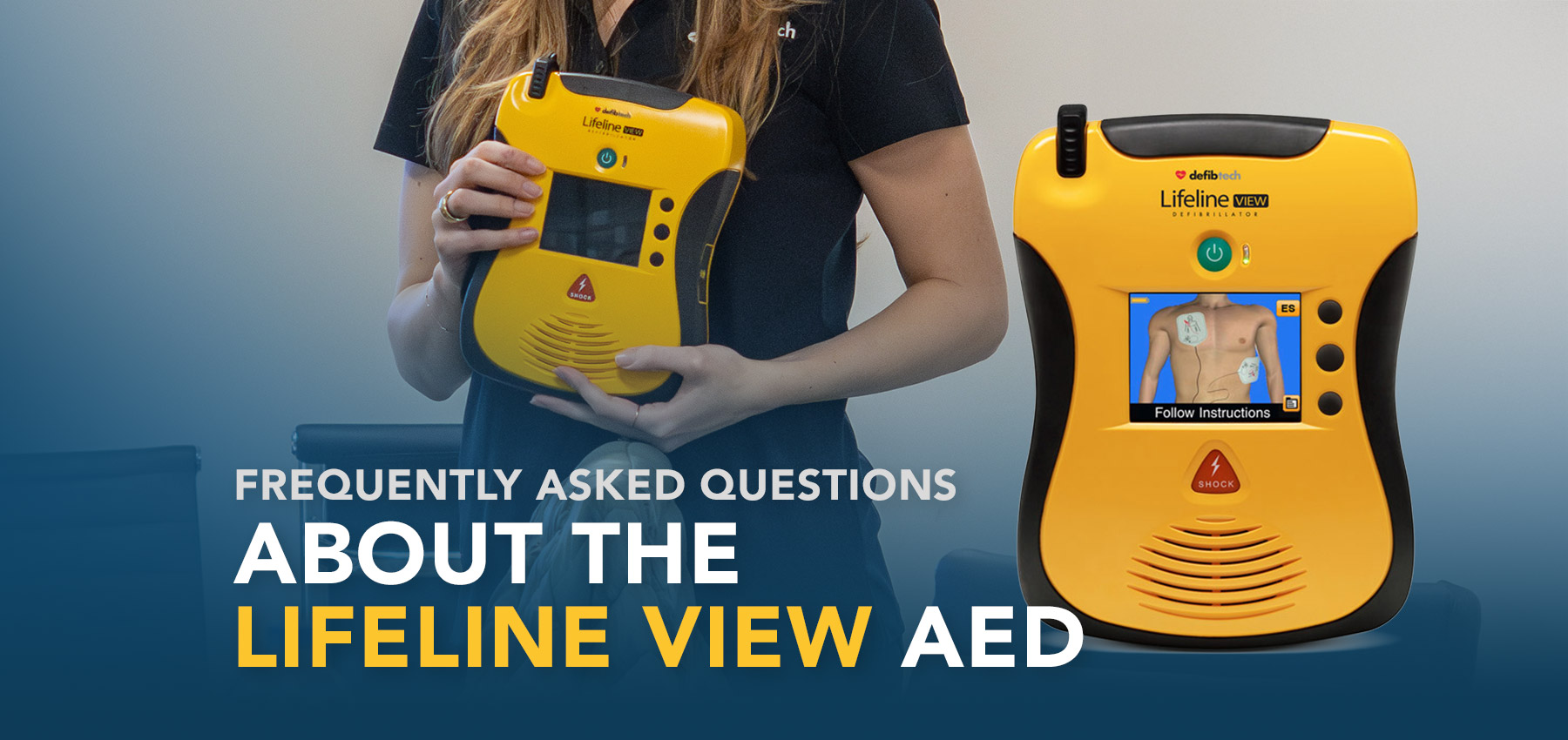
Frequently Asked Questions about the Lifeline View AED

The Lifeline VIEW AED is unique because of its interactive video display screen with rescue directions for defibrillation and CPR. For rescuing both adults and children, read answers to the [...]

Read News

Sudden Cardiac Arrest Awareness Month

Sudden cardiac arrest (SCA) occurs when an electrical malfunction of the heart causes it to suddenly stop beating properly. There are often no warning signs.

Read News

Reliable AEDs: What to Look For and Why it Matters

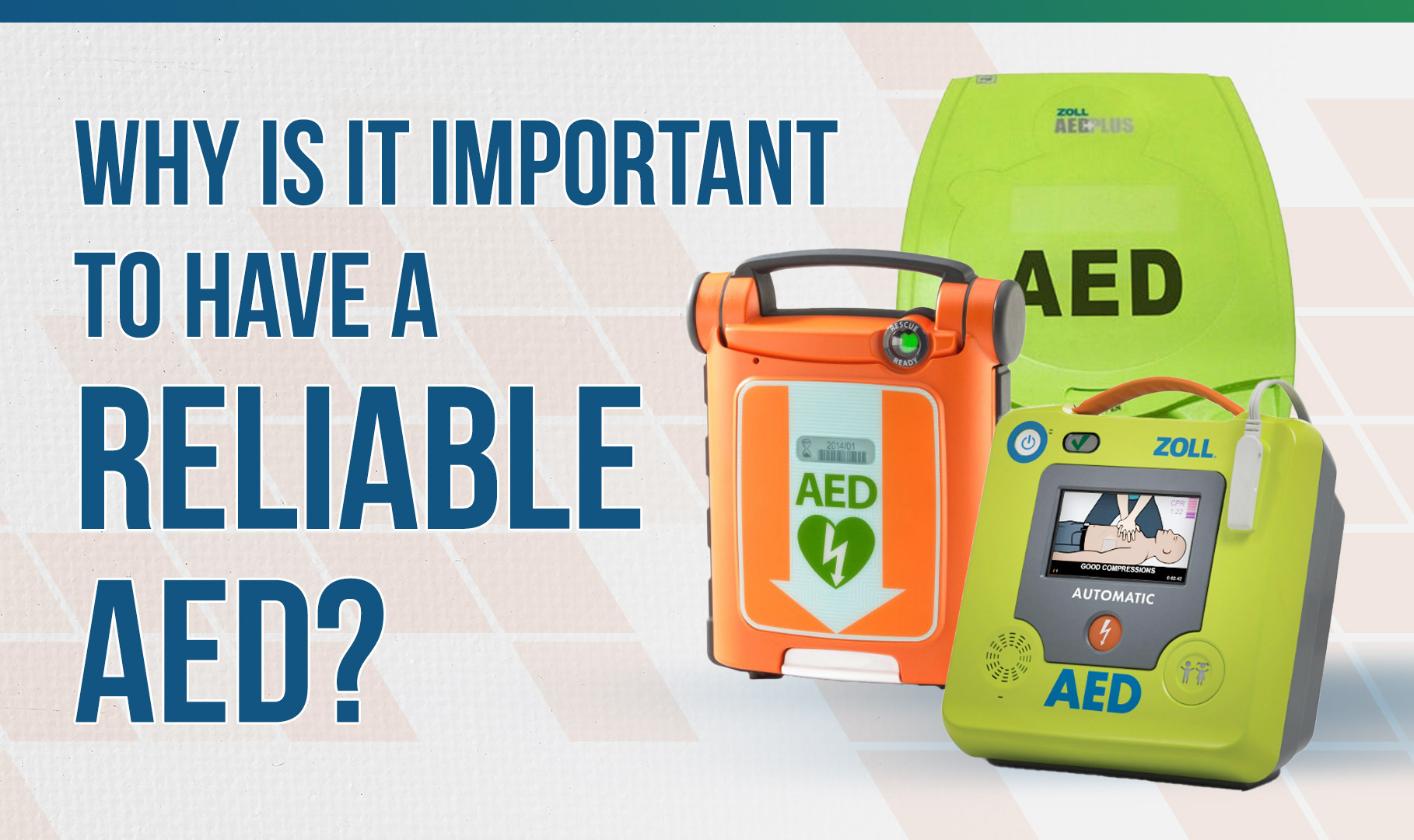
With recent AED recalls removing hundreds of thousands of defective products from the market, choosing an AED with rigorous factory testing is more important than ever. How do you choose [...]

Read News

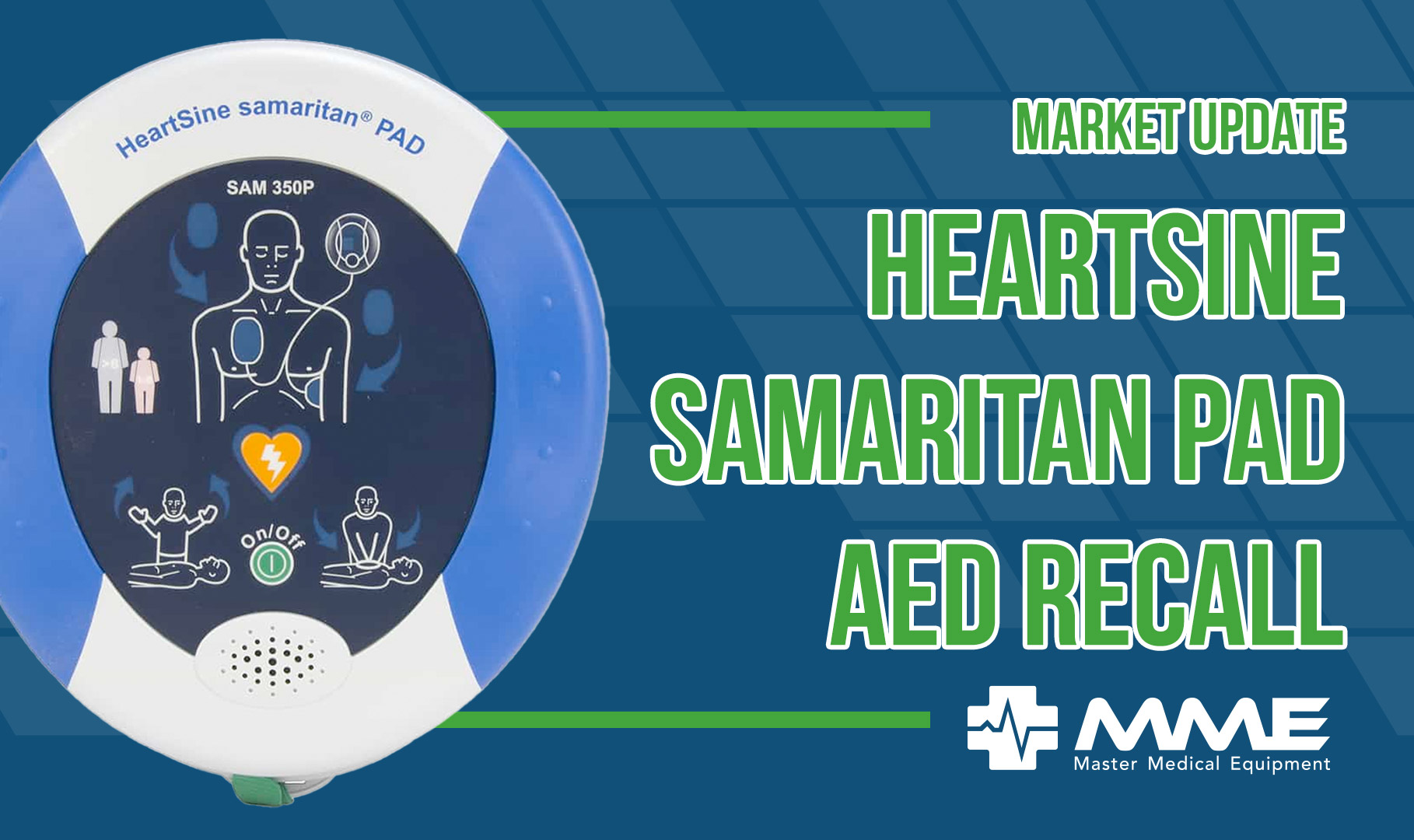
Critical Recall of HeartSine AEDs

A Class II recall has been issued for over 190,000 models of the Stryker HeartSine AED. The FDA reports devices possibly failing to shock due to a circuit board defect. [...]

Read News

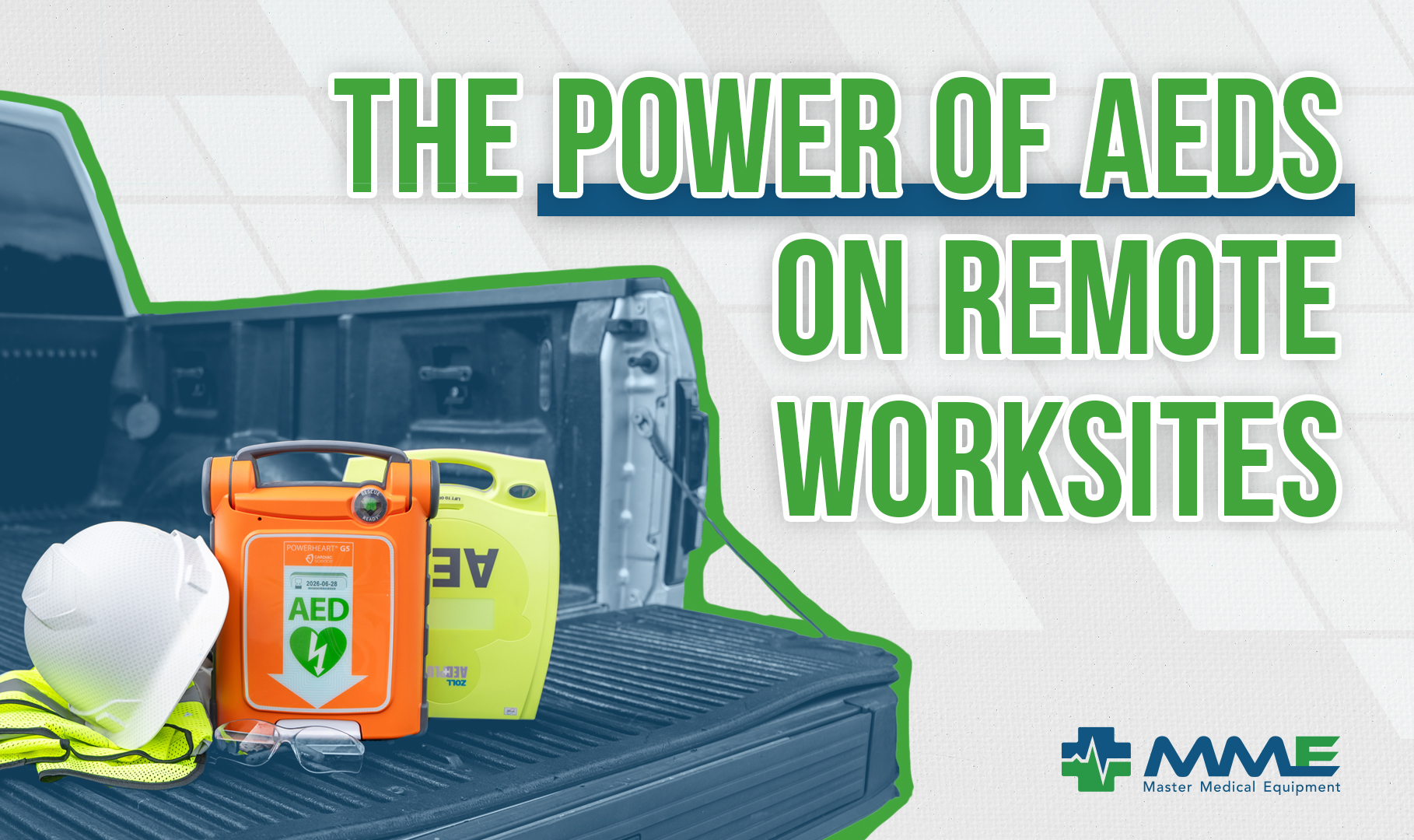
A Life Saved: The Power of AEDs on Remote Worksites

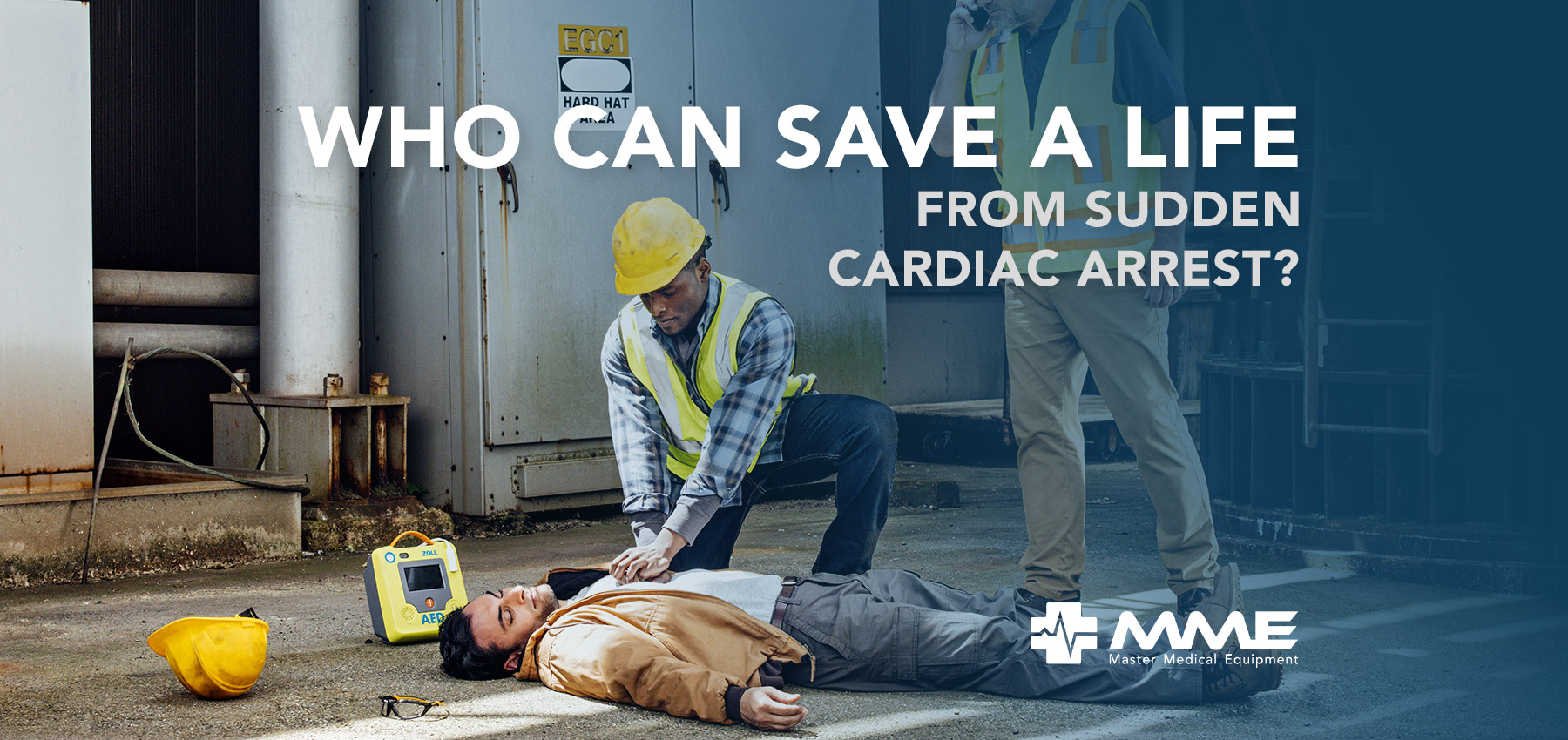
Thanks to their quick response, cooperation, and first aid training – and most importantly, access to the AED – Devin was shaken but back on his feet by the time [...]

Read News

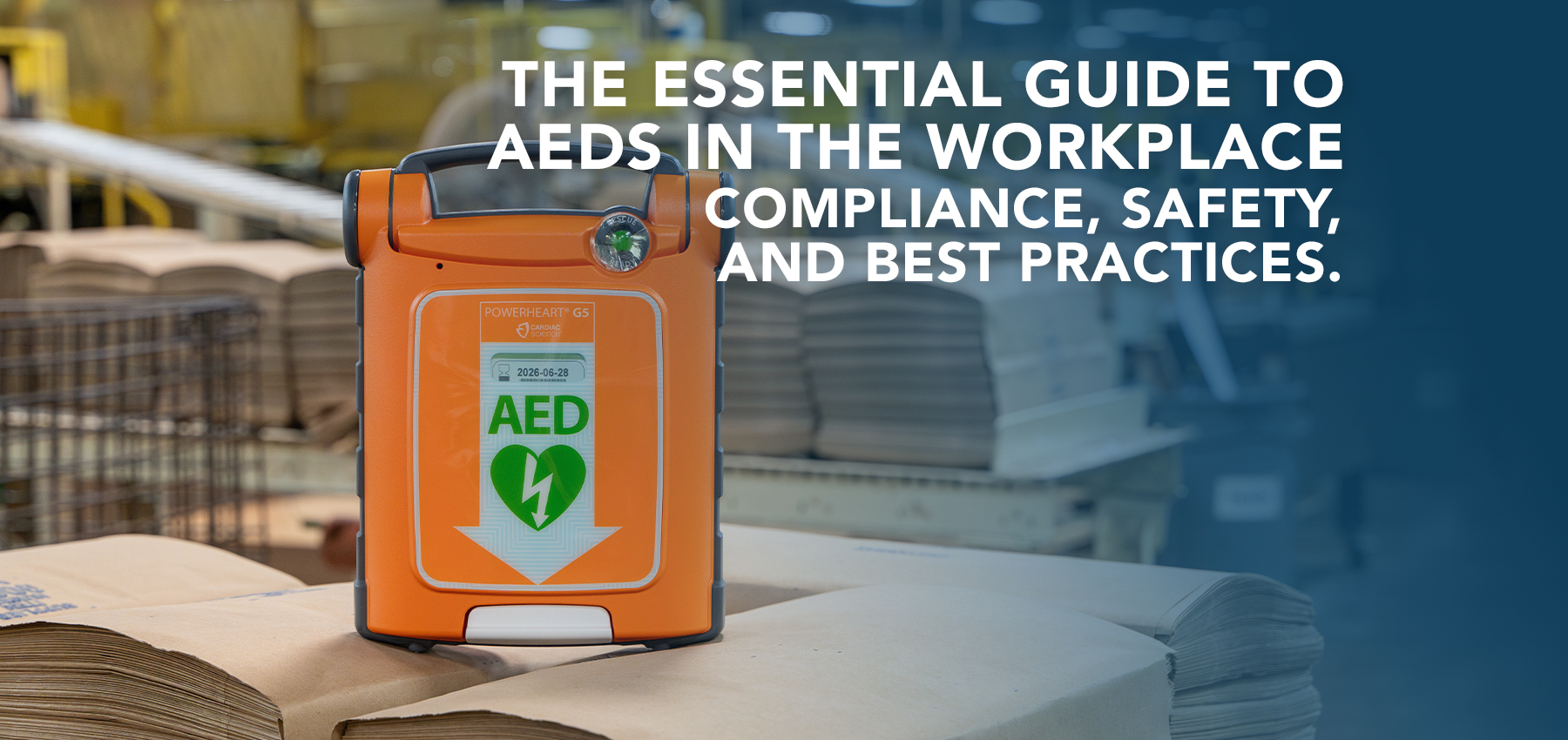
When Seconds Count: A Factory’s AED Brings Worker Back to Life

“A lot of people think they’ll never have to use an AED. But it’s important to know where they are. And when you do need it, it tells you step-by-step [...]

Read News

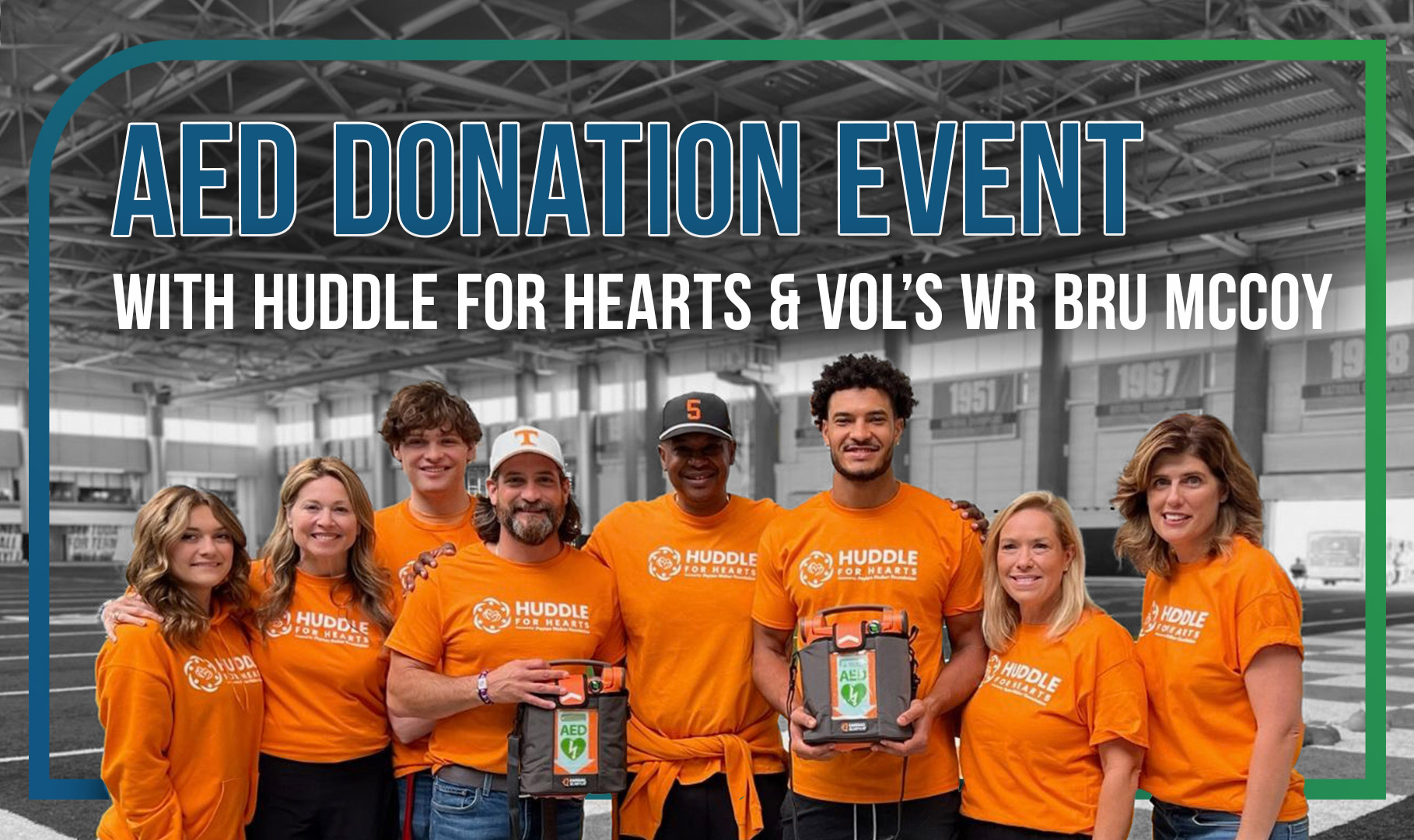
MME Provides AEDs for Donation with Bru McCoy & Huddle for Hearts

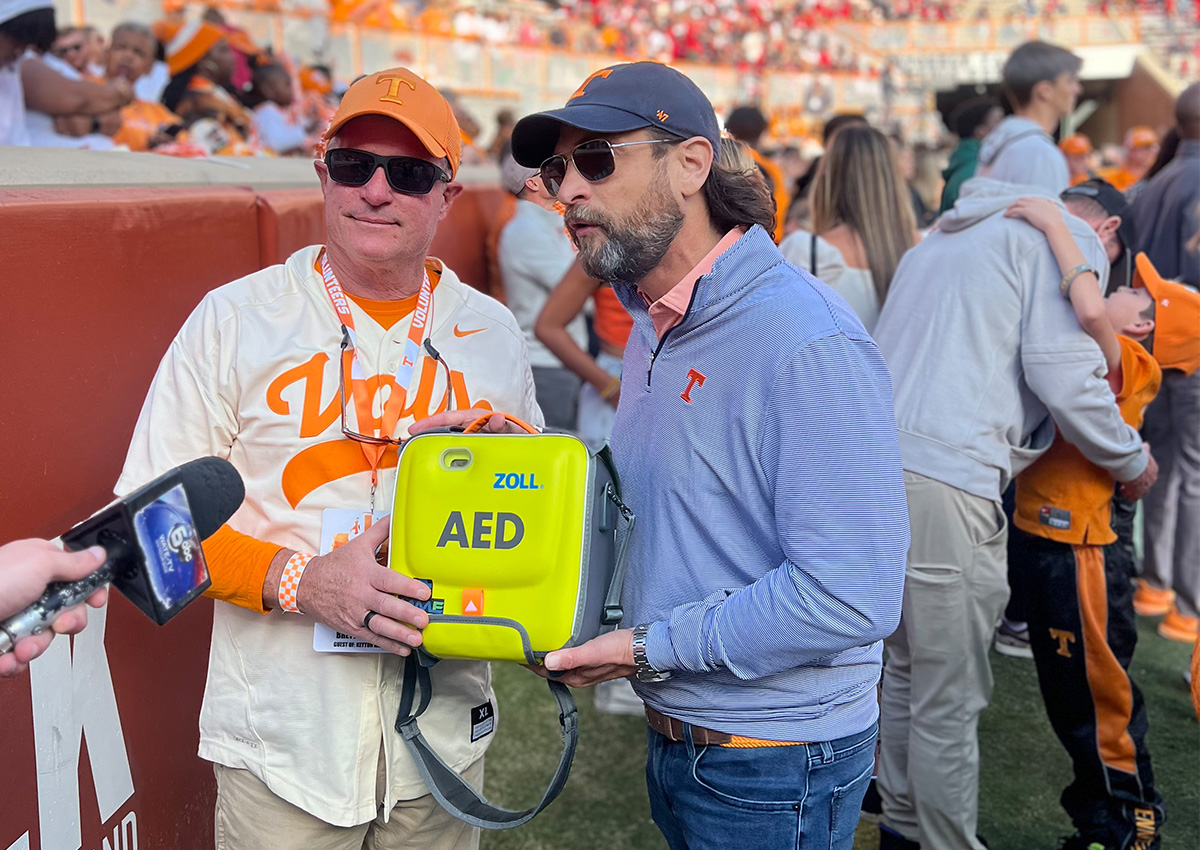
MME participated in an AED donation event alongside UT Vols wide receiver Bru McCoy and Huddle for Hearts in Knoxville.

Read News

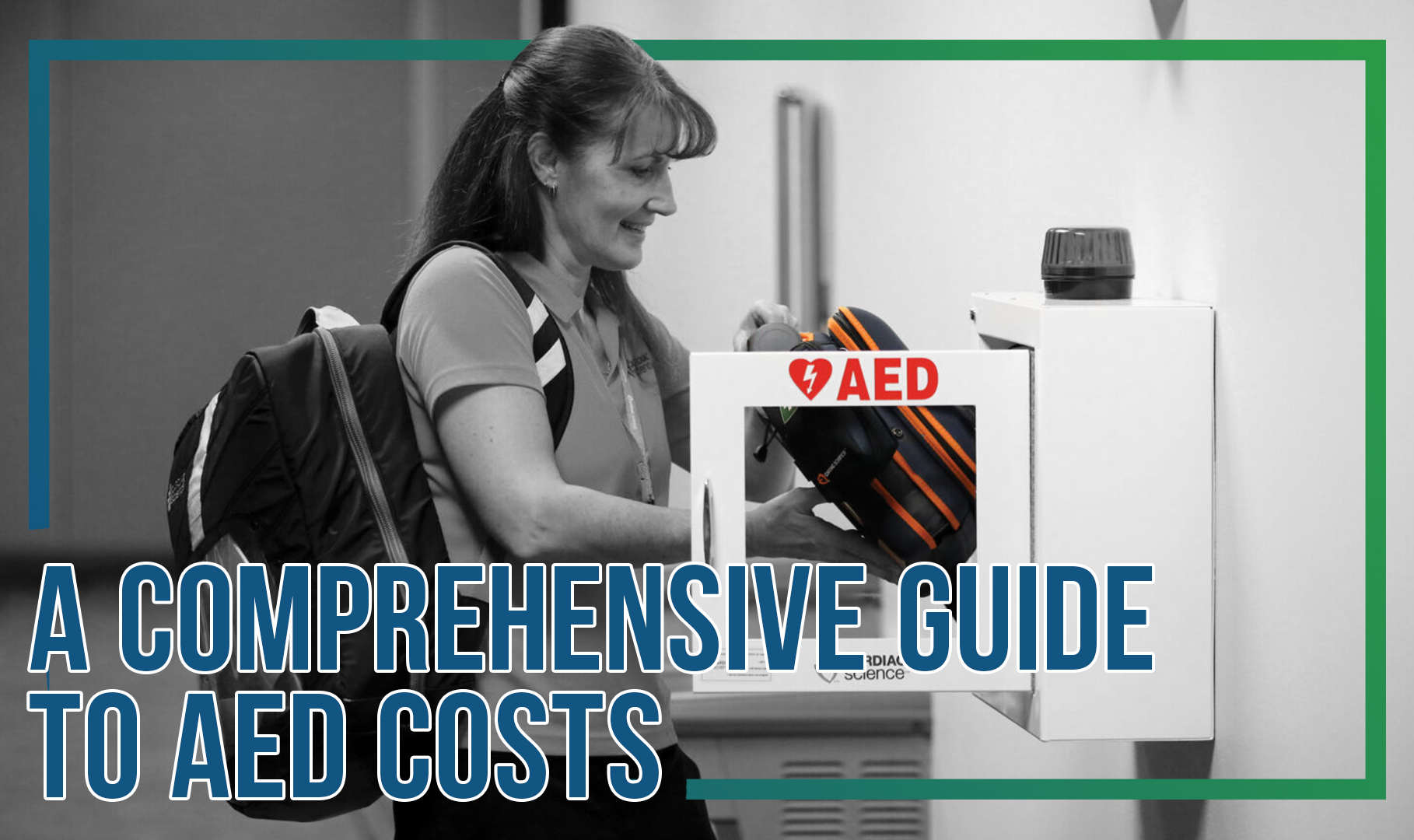
A Comprehensive Guide to AED Costs

When it comes to purchasing life-saving equipment like Automated External Defibrillators (AEDs), cost can be a primary concern.

Read News

AED For At-Home Sudden Cardiac Arrests

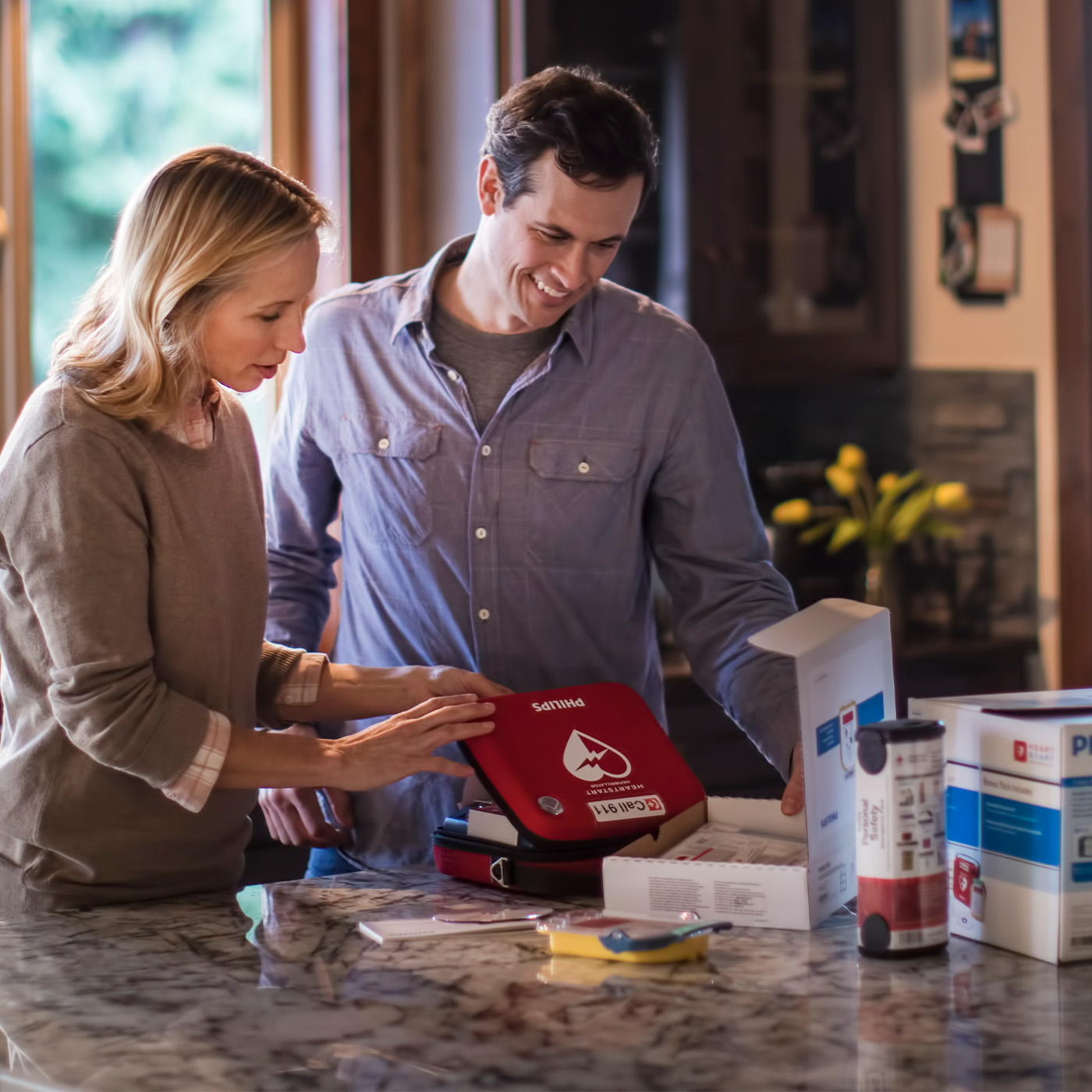
While many acknowledge the need for AEDs in public spaces, the one space where the majority of cardiac arrest incidents take place is often overlooked, the home.

Read News

Six Myths About AEDs With Jon Abernathy

AEDs are designed for everyone, including bystanders without medical training. Jon Abernathy busts other common myths about AEDS.

Read News

Sort by popular tags:

#AED #Public Access
See All News