
Zoll AED 3 Semi Automatic 8511-001101-01 – Zoll
Price range: $1,895.00 through $3,214.00
The AED that leads the way
Giving unexpected heroes the confidence to help save lives

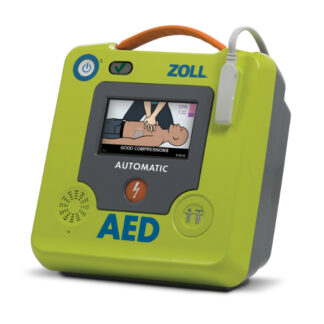
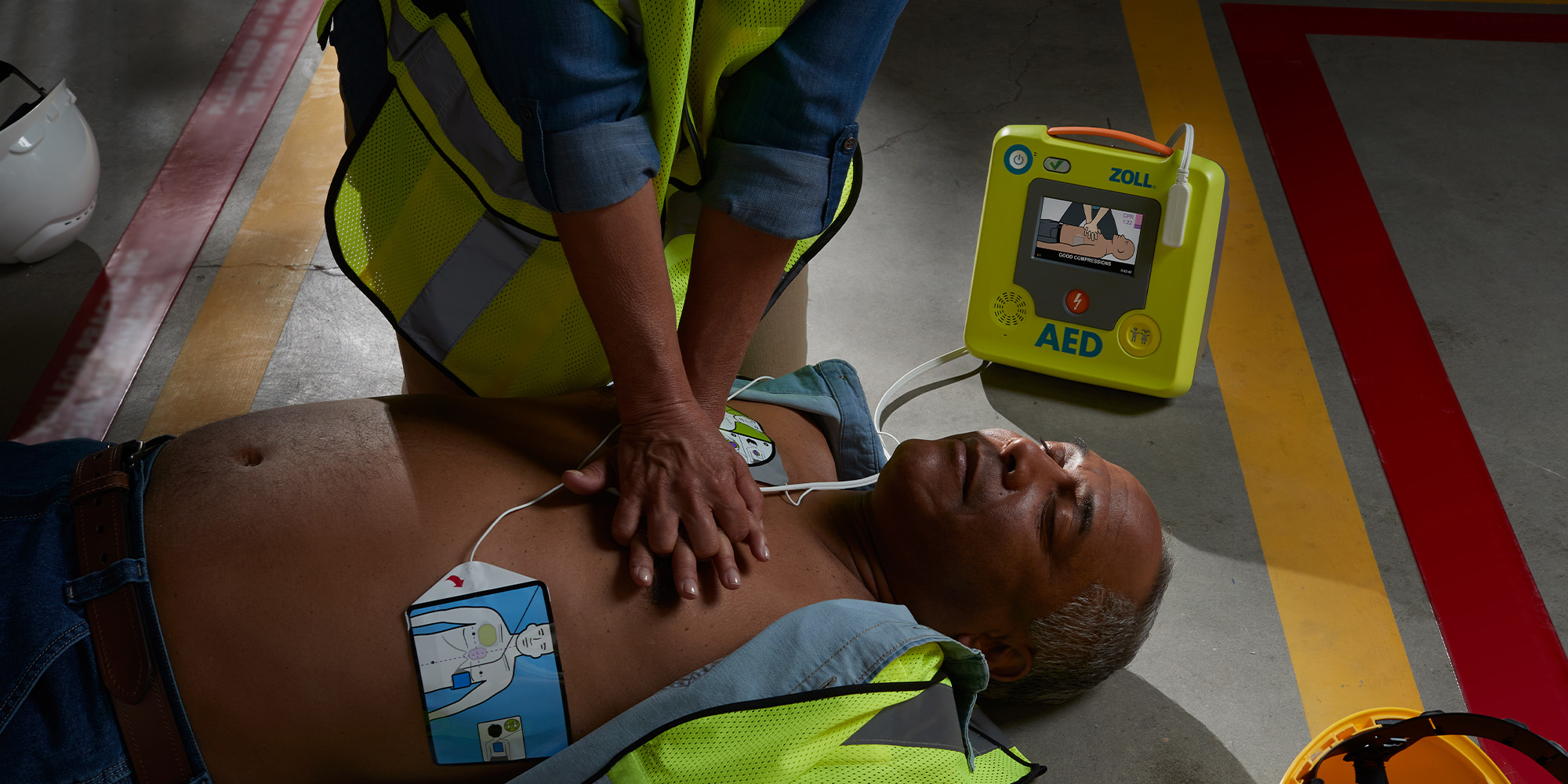
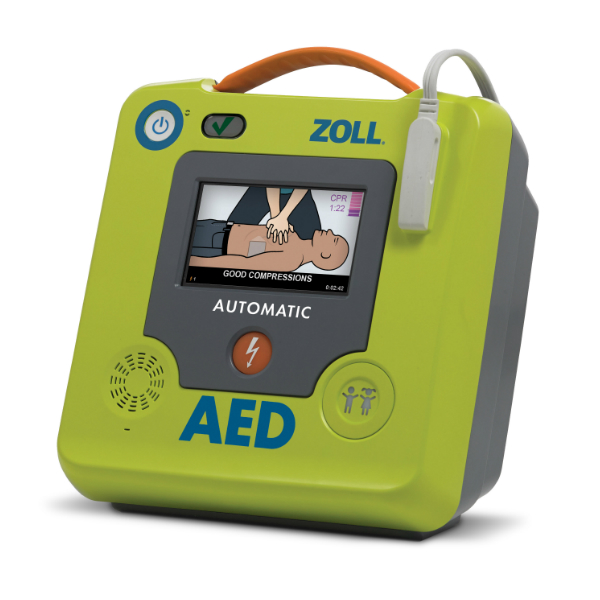
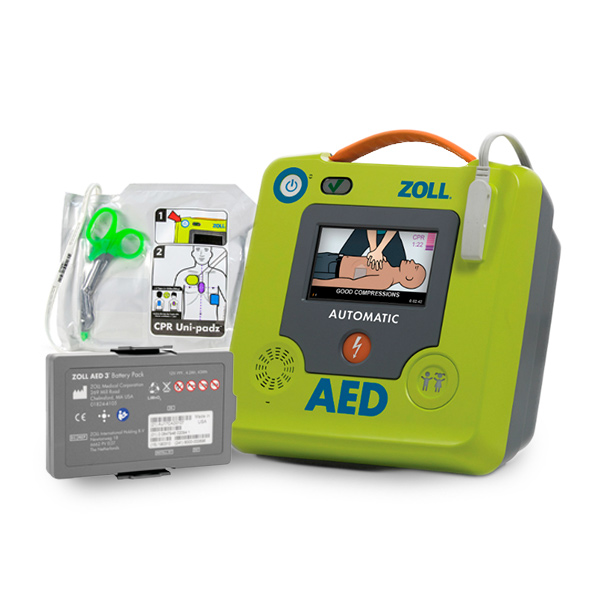
The ZOLL AED 3® defibrillator features real-time CPR feedback, full-color rescue images, RapidShock™ analysis technology, and an integrated child mode, making it simple to treat both adult and pediatric victims of SCA. Designed with readiness in mind, ZOLL AED 3 includes long-life consumables and optional WiFi connectivity for remote monitoring of the AED’s status.
Please select either a New or Recertified Zoll AED 3 Semi Automatic, or the Zoll AED 3 BLS from the dropdown below.
Please be aware some accessories on the recertified version of the product will also be recertified, and all recertified units may be subject to longer lead times.
Related Tags
Zoll AED 3 Accessories
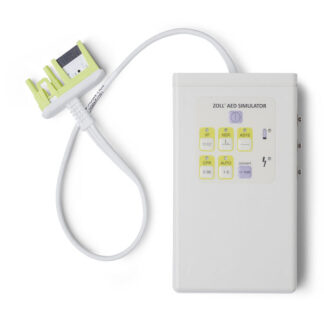
AED 3 AED Plus and AED Pro Simulator 8000-000925 -Zoll
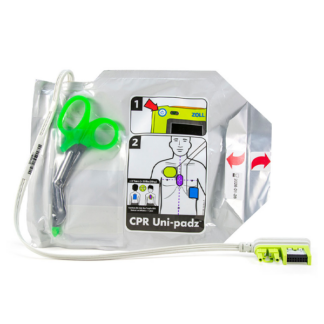
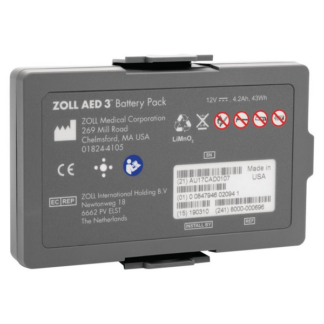
AED 3 Battery Pack 8000-000696 – Zoll
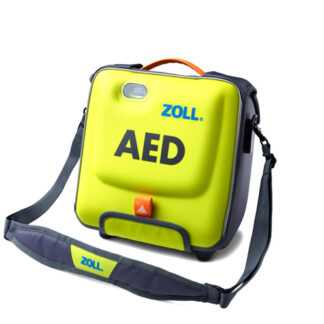
AED 3 BLS Carry Case 8000-001250 – Zoll
AED 3 Specifications
Semi-automatic and Fully Automatic configuration
ZOLL Medical Rectilinear Biphasic™
30 seconds; ZOLL AED 3 Automatic model: 3 seconds before automatic shock delivery
Factory preprogrammed selection (Adult: 120 J, 150 J, 200 J; Child: 50 J, 70 J, 85 J)
Every patient connection is electrically isolated
Less than 10 seconds with a new battery
Less than 5 seconds with RapidShock Analysis (semi-automatic) and less than 8 seconds (fully automatic) with a new battery
ZOLL Medical CPR Uni-padz®
Configurable automatic self-test every day or every seven days. Default: every seven days. Monthly full-energy test (200 J).
Battery capacity, status, and expiry; electrode connection and expiry; ECG and charge/discharge circuits; microprocessor hardware and software; CPR circuitry and pads sensor; audio circuitry
1.9 cm to 10.2 cm; 0.75 in. to 4 in
Evaluate the defibrillation pad patient ECG and connection to determine if defibrillation is required.
Ventricular fibrillation with average amplitude >100 microvolts and wide complex ventricular tachycardia with rates greater than 150 BPM for adults and 200 BPM for pediatrics. Refer to ZOLL AED 3 Administrator’s Guide for ECG analysis algorithm sensitivity and specificity.
10 to 300 ohms
Protected ECG circuitry
High-resolution LCD with capacitive touch panel
5.39 cm x 9.5 cm; 2.12 in x 3.74 in
The user can configure 1 or 2 clinical events for 120 minutes each. Includes ECG, impedance measurements, device prompts, and CPR data.
Accessed via touchscreen, uploaded to USB memory stick, or ZOLL Case Review™ over a Wi-Fi network
(H x W x D) 12.7 cm x 23.6 cm x 24.7 cm; 5.0 in x 9.3 in x 9.7 in
2.5 kg; 5.5 lbs (with battery)
Battery
Wireless 802.11 a/b/g/n; Security Protocols, WPA1, WPA 2, WPA Personal, WPA Enterprise; Internal Clock Synchronization: Syncs according to Coordinated Universal Time (UTC) when communicating with the ZOLL Online server.
Class II and internally powered per EN60601-1
Meets the requirements of EN 60601-1, IEC 60601- 1-11, IEC 60601-2-4
0° to 50°C; 32° to 122°F
-30° to 70°C; -22° to 158°F
10% to 95% relative humidity, non-condensing
IEC 60068-2-64, Random, Spectrum A.4, Table A.8, Cat 3b; RTCA/DO-160G, Fixed Wing Aircraft, Section 8.6, Test Cat. H, Aircraft Zone 1 and 2, EN 1789, Sweep per EN 60068-2-6 Test Fc.
IEC 60068-2-27; 100G
-381 m to 4573 m; -1250 to 15,000 ft
IP55
1 meter; 3.28 feet
A typical new battery running at an ambient temperature of +20° C to +25°C (68° F to 77° F) can provide 140 defibrillator discharges at maximum energy (200 joules) or 6 hours of continuous monitoring (with 2-minute CPR periods) Note: CPR periods shorter than 2 minutes can decrease the operating time of a new battery.
Disposable, sealed lithium manganese dioxide
5 years with weekly self-test. End of life indicated by blank status window (typical remaining shocks: 9).
Store for up to 2 years at 23°C (77°F) before installing in ZOLL AED 3 to maintain the above battery life.
0°C to 50°C (32°F to 122°F)
10% to 95% (non-condensing)
317.5 grams; 0.7 lbs
(H x W x D) 27.75 mm x 133 mm x 88 mm; 1.0 in x 5.16 in x 3.5 in
12 volts
5 years
Polymer Hydrogel
Tin
Multilayer foil laminate pouch
Low
142 (+/-3.8) cm; 56 (+/- 1.5) in
Meets requirements of IEC 60601-2-4, 2010