Emergency Medical Services (EMS) environments are often unpredictable and high-pressure. Providers must assess patients quickly and make life-altering decisions within minutes. In these circumstances, patient safety depends heavily on reliable equipment and established protocols.
Patient transportation, in particular, comes with many risks. Harm can come through rough motion, falls, loading of stretchers, and transfers (especially for patients whose injuries require that they remain still, such as a spinal injury).
Because of these risks, emergency medicine providers must be equipped with tools designed to stabilize patients, improve transport safety, and reduce strain on providers. Below are some key tools that help improve patient safety in emergency medicine.
Tool #1: A Good Stretcher
Stretchers are an essential element of EMS service. They provide stability and support from the scene of an incident to the ambulance and from the ambulance into the hospital.
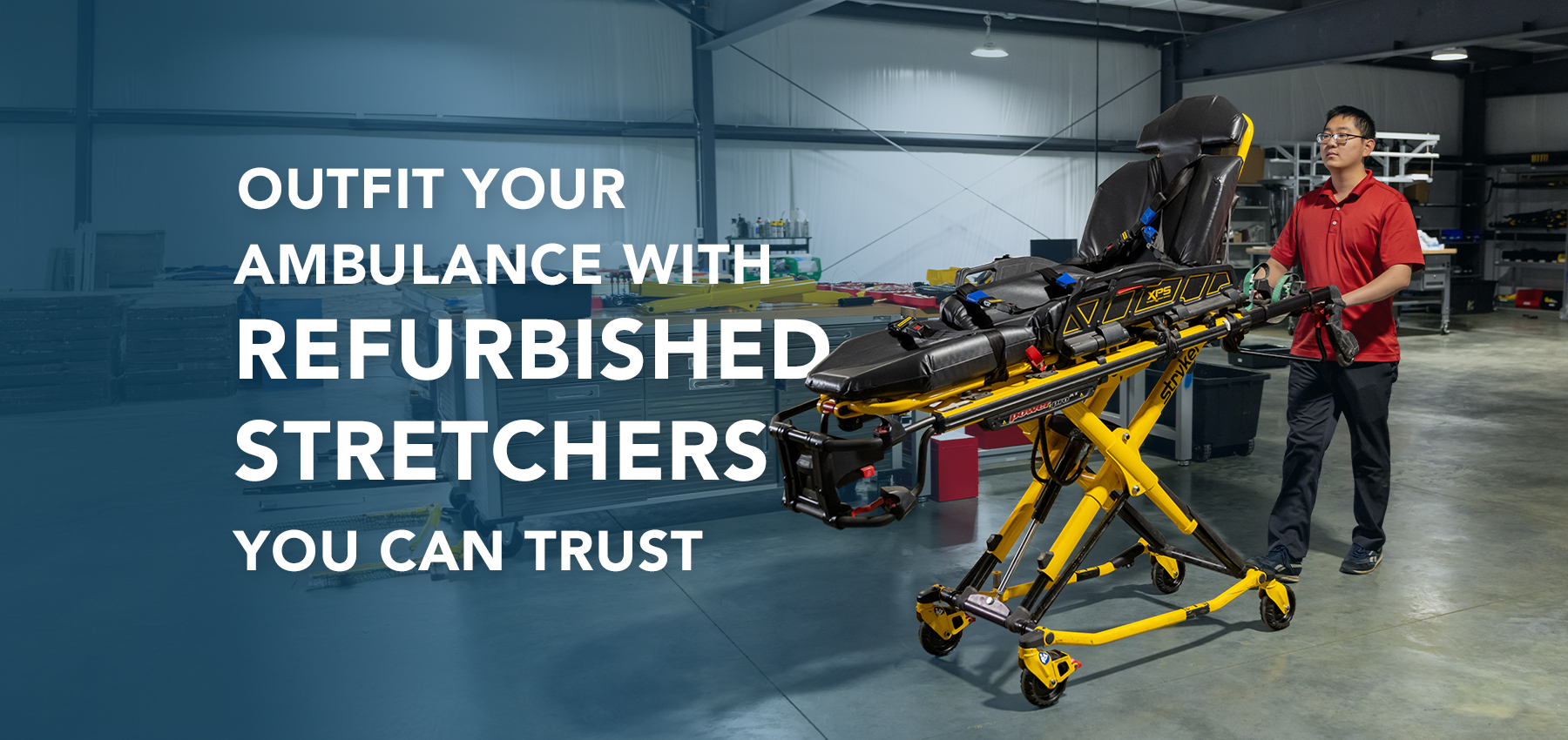
Reliable options, such as the FERNO X1 and X2 and the recertified Stryker POWER-PRO XT, allow EMS providers to focus on patient care while reducing risk of mechanical failure. At MME, we offer refurbished stretchers re-certified by the credentialed biomedical technicians at ReNew Biomedical. They test each stretcher to the rigorous ISO 13485 quality assurance standards, which means you can trust our stretchers to function as intended to keep patients safe.
Tool #2: Patient Handling Straps
Patient handling straps are another tool that allows for safer, easier transportation of patients. Straps like the Patient Assist Lift Strap (PAL Strap) help EMS teams securely and easily lift a patient to a cot, chair, or to standing with minimal strain on the patient. The PAL Strap is wrapped around the back and legs of a seated patient and then used to move the patient with less risk of injury to the patient or the medical team.
Tool #3: Transfer Tools
Similar to patient handling straps, reliable transfer tools help reduce sudden motion that can injure the patient while moving them from the floor to a stretcher or from a stretcher to a hospital bed.
These transfers are especially high risk for patients with:
- Spinal injuries
- Fractures
- Reduced mobility
- Altered mental status
Patient handling accessories such as the Binder Transport Sheet (PHASE) and the Bed-EVAC improve safety by creating a more secure hold and a stable surface.
Tool #4: Effective Protocol
Even the best equipment is only as effective as its clinical protocols. EMS providers must make quick assessments and even quicker decisions. Having a comprehensive, consistent protocol allows EMS teams to follow evidence-based procedures to provide safe treatment and reduce field guesswork.
Protocols help EMS teams:
- Reduce decision fatigue
- Standardize care across providers
- Improve patient outcomes
- Ensure compliance with training standards
Tool #5: Call Debriefs
Another often overlooked tool for improving patient safety is a post-call debrief.
After complex or high-risk calls, brief team discussions allow EMS crews to review what went well, identify potential safety concerns, and discuss opportunities for improvement. Structured debriefs can improve team communication, situational awareness, and performance in future incidents.
Even short, informal debriefs can strengthen team performance and contribute to a culture of continuous improvement and patient safety.
Prioritizing Patient Safety in EMS
Patient safety in emergency medicine depends on the combination of reliable equipment, effective training, clear protocols, and team communication.
Tools like modern stretchers, patient lifting straps, transfer systems, and post-call debriefs help EMS providers safely manage patient transport while reducing risks to both patients and medical teams.
If you’re evaluating your EMS program, consider reviewing your transport equipment, lifting tools, and safety protocols to ensure they support the highest level of patient care.
Interested in buying stretchers or patient handling tools?
Contact Master Medical Equipment today:
📞 866-797-3188