AEDS FOR THE SCHOOL
The safety of your students and faculty is the top priority
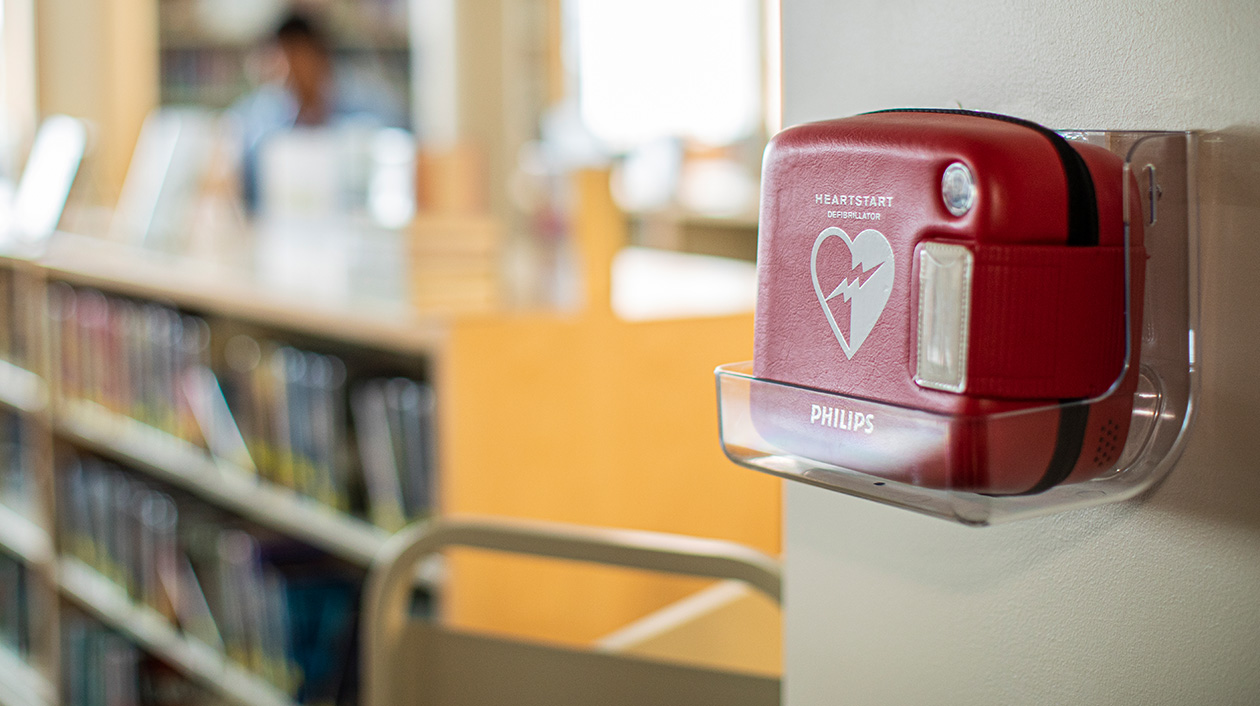
Ensure Your Students’ Safety
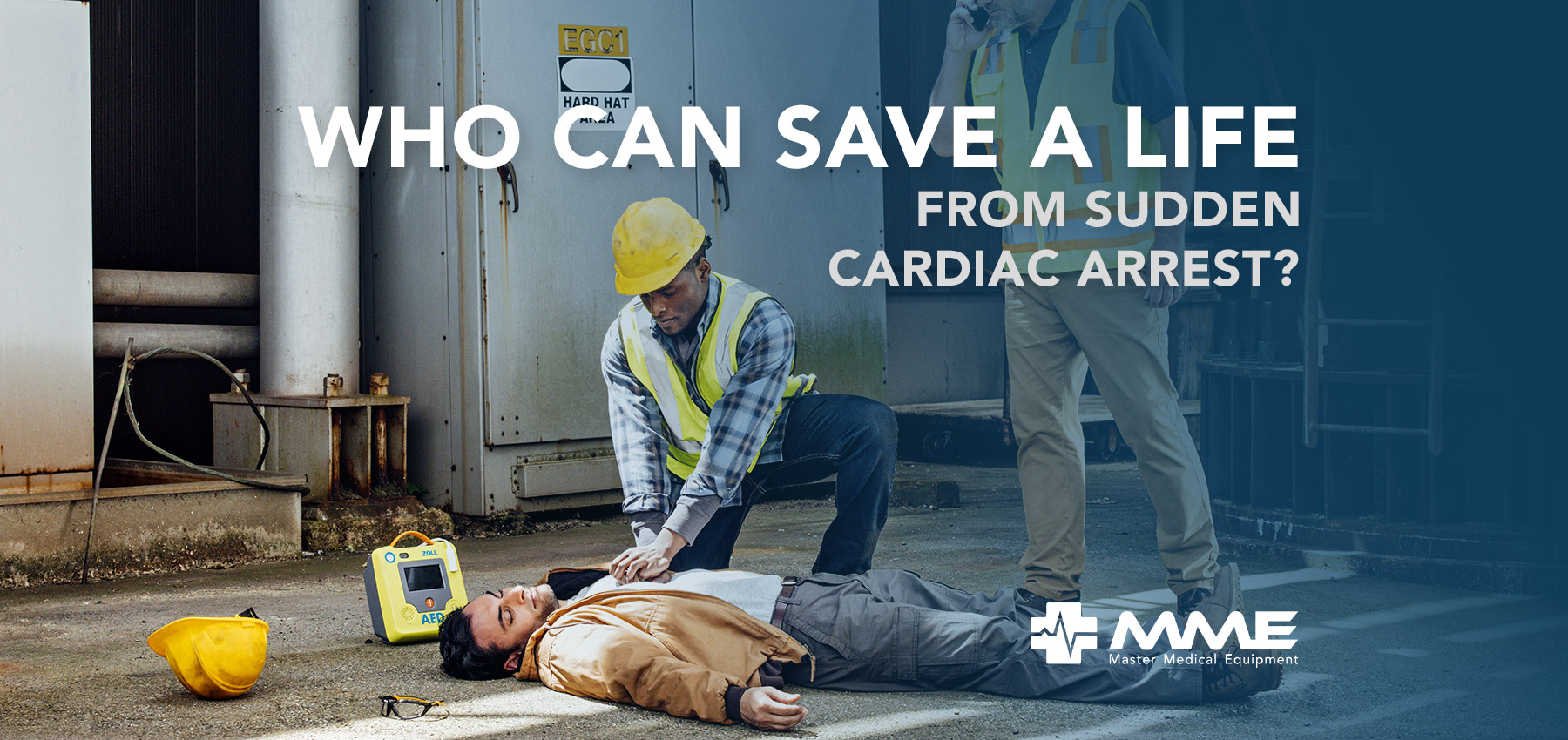
Sudden cardiac arrest (SCA) is one of the leading causes of death in the U.S., taking the lives of over 366,000 people annually. SCA can strike anyone anywhere, at any time, without warning. Without immediate emergency response, victims of cardiac arrest only have minutes to live, and for every minute that goes by without a defibrillating shock, chances of survival drop by 10%. The average EMS response time is around seven minutes, meaning that often life-saving help does not arrive in time. As a result, up to 95% of out-of-hospital SCA victims die because of a delay in emergency response.
- SCA is the leading cause of death on school campuses
- SCA is the leading cause of death for student-athletes
- On average, SCA tragically takes the lives of between 7,000-10,000 American youth every year
There’s a simple solution: Automatic External Defibrillators (AEDs). SCA is caused by an irregular rhythm of electrical activity in the heart and can only be treated with an electric shock (defibrillation) from an AED. AEDs are designed to be easy-to-use and cost-effective. We help hundreds of churches install life-saving AEDs every year.
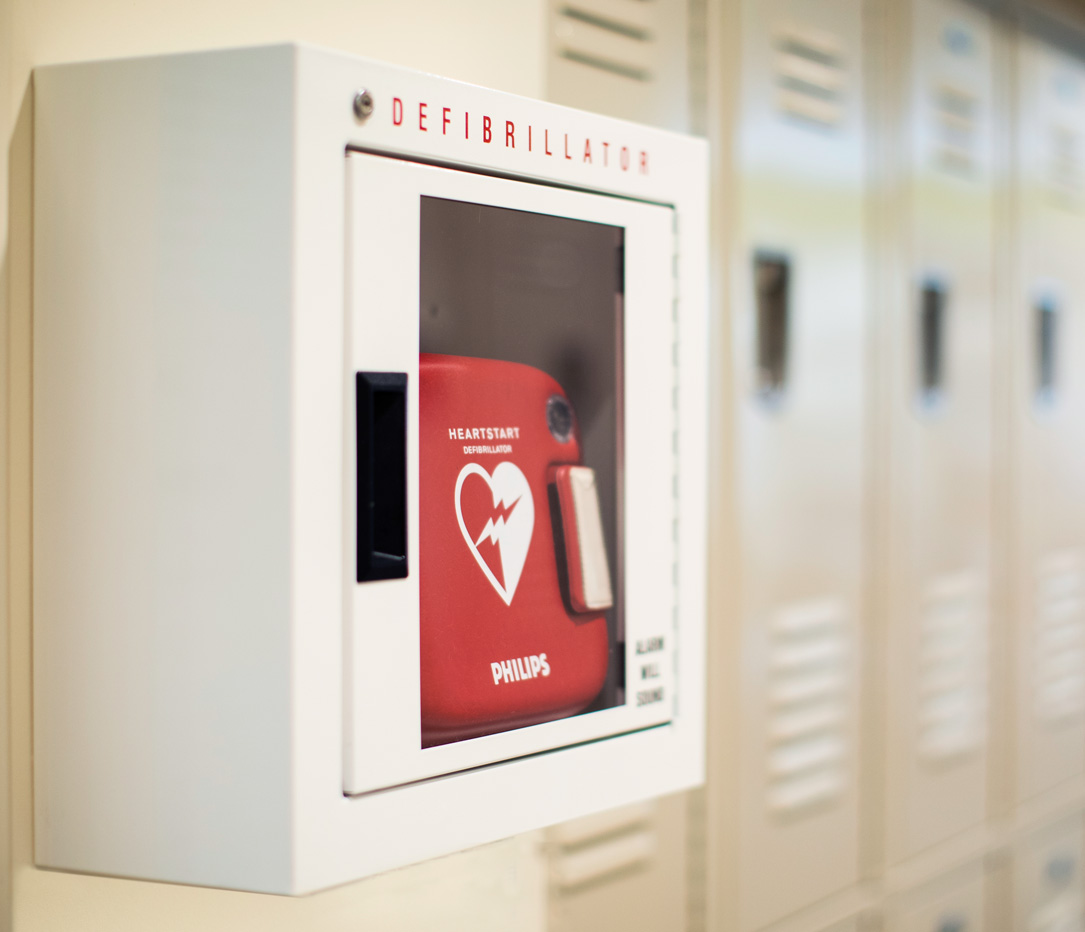
Preparing for AEDs in the School
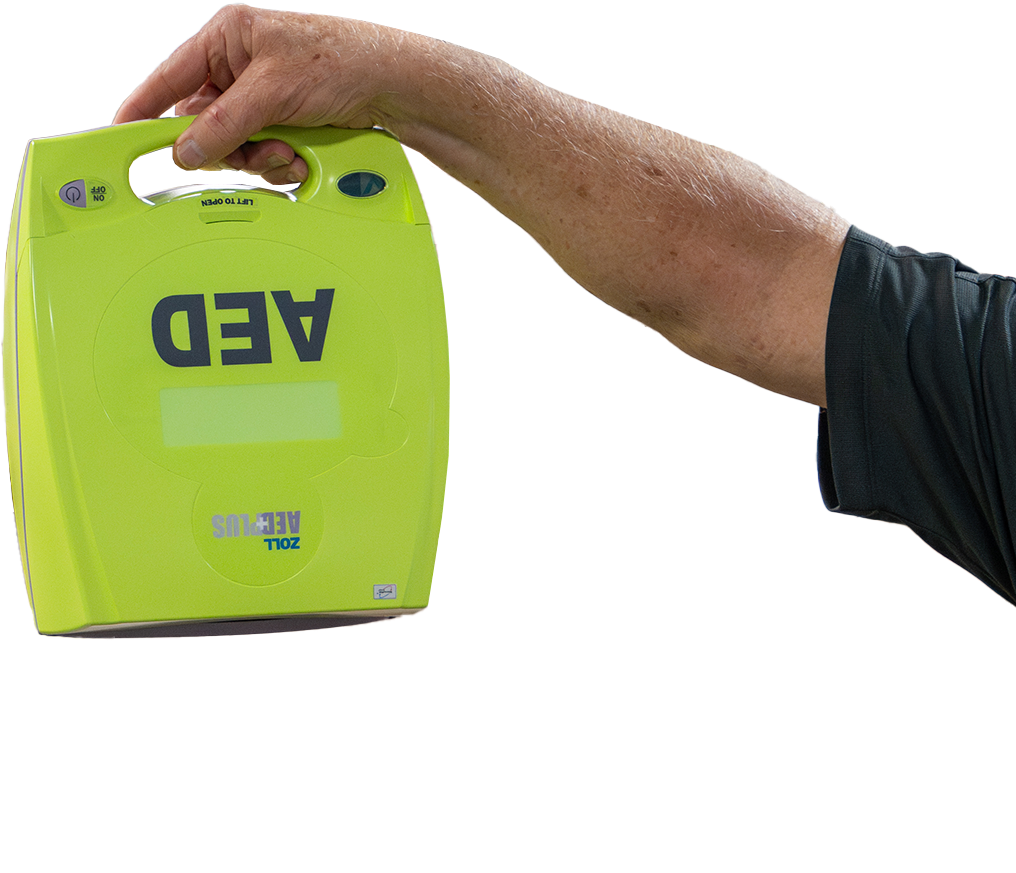
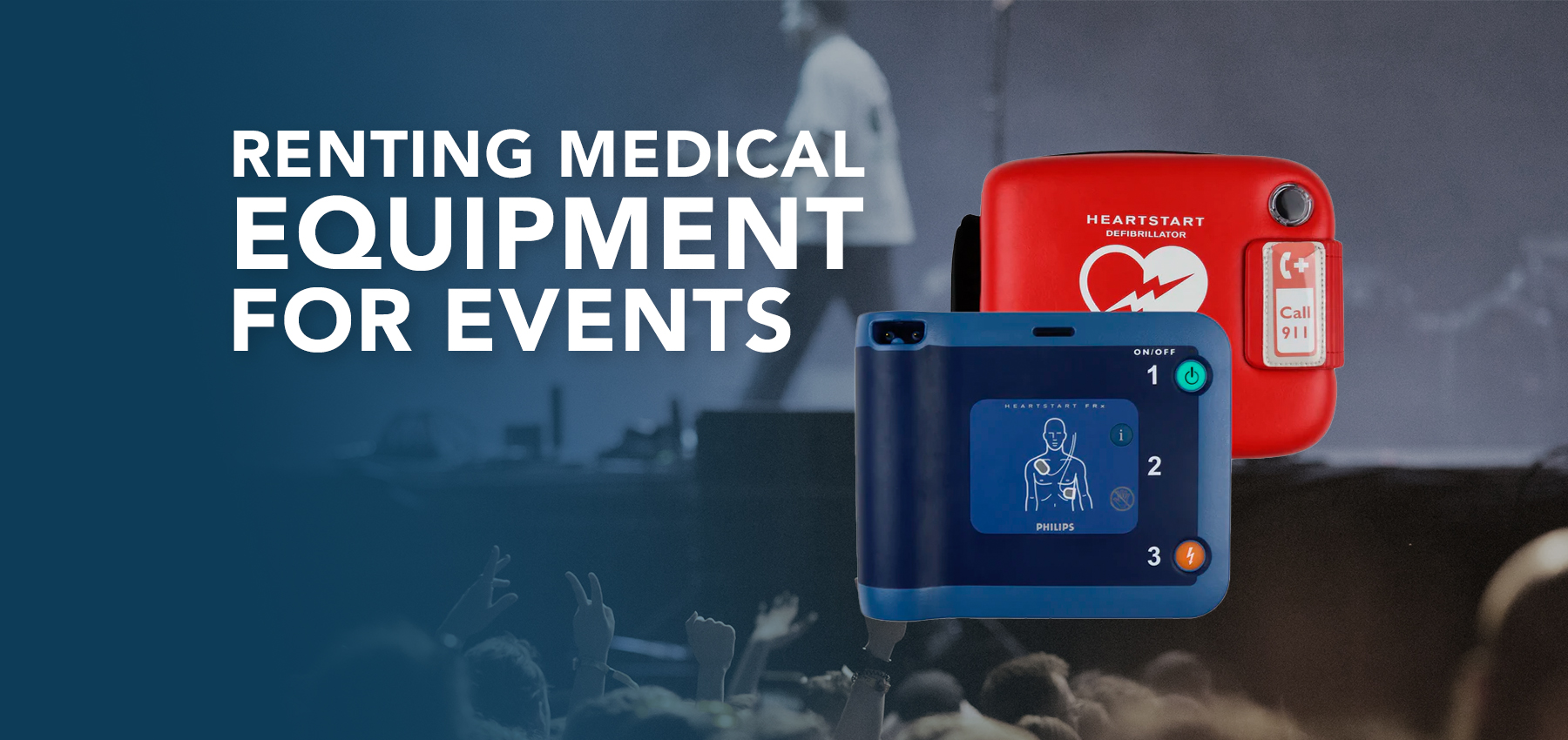
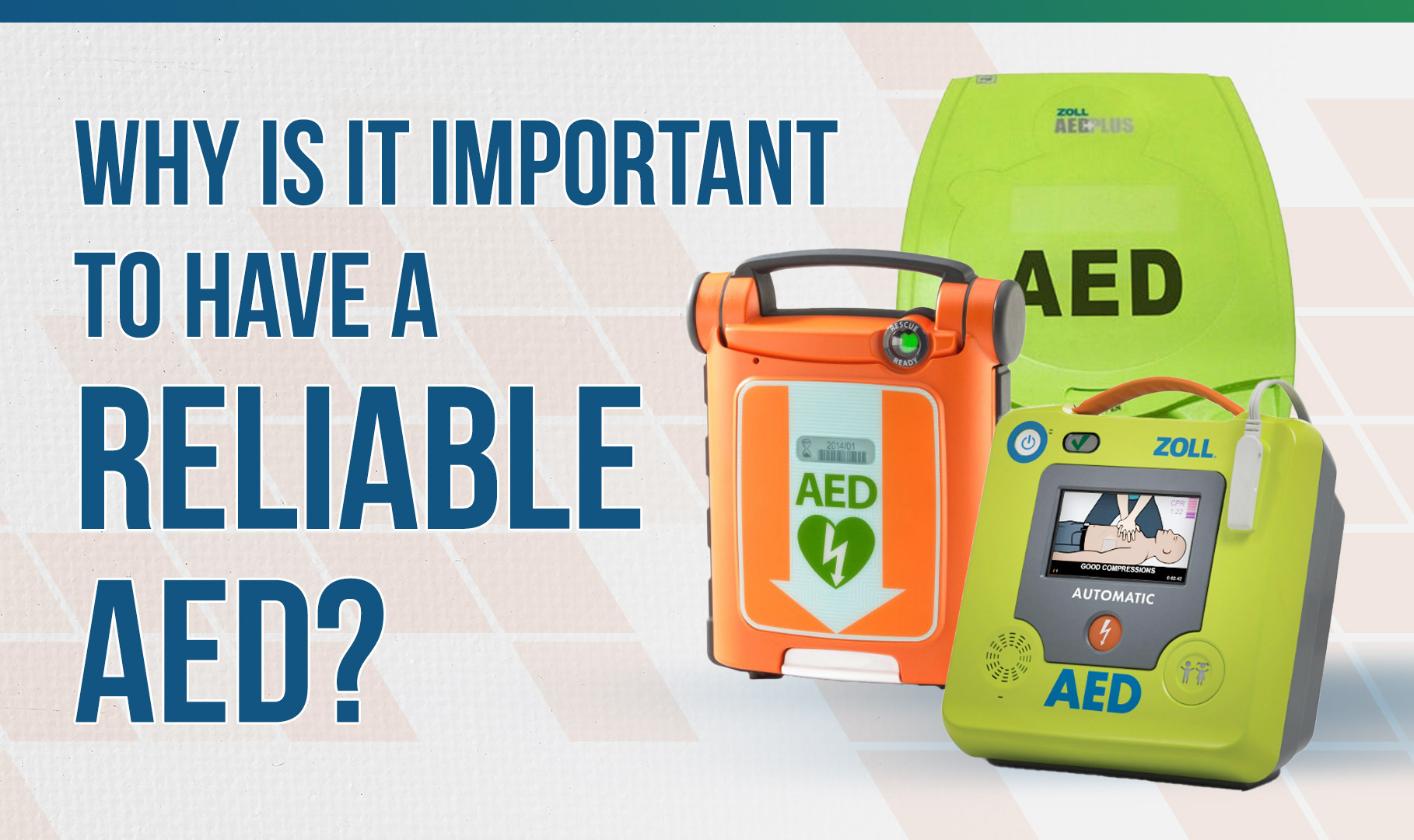
AEDs come in all shapes and sizes but all are designed to be used by either an untrained bystander or a trained medical professional to deliver a life-saving shock in a critical situation. However, AEDs have features that make them ideal for certain settings. For schools and universities, including Pre-K and elementary, middle and high school, private universities, and state colleges, we recommend the Zoll AED Plus, the Cardiac Science G5, and the Philips FRx AED. These AEDs have low long-term cost of ownership comes with features ideal for school settings:
- New AED,Rescue-Ready out of the box
- Simple interface. Designed with ease-of-use in mind for anyone to save a life
- A timed metronome guides rescuers on CPRtempo
- Long Life
- Eight-year manufacturer warranty (longest in the industry)
- Daily, weekly, and monthly self-tests for easy maintenance
- Rugged, durable unit with a high IP rating and wide range of storage conditions
- Pediatric pads or keys available, easily switch to a child-safe shock level
- Wall-mounted cabinet available
- AED wall sign available
- First Aid Kit available
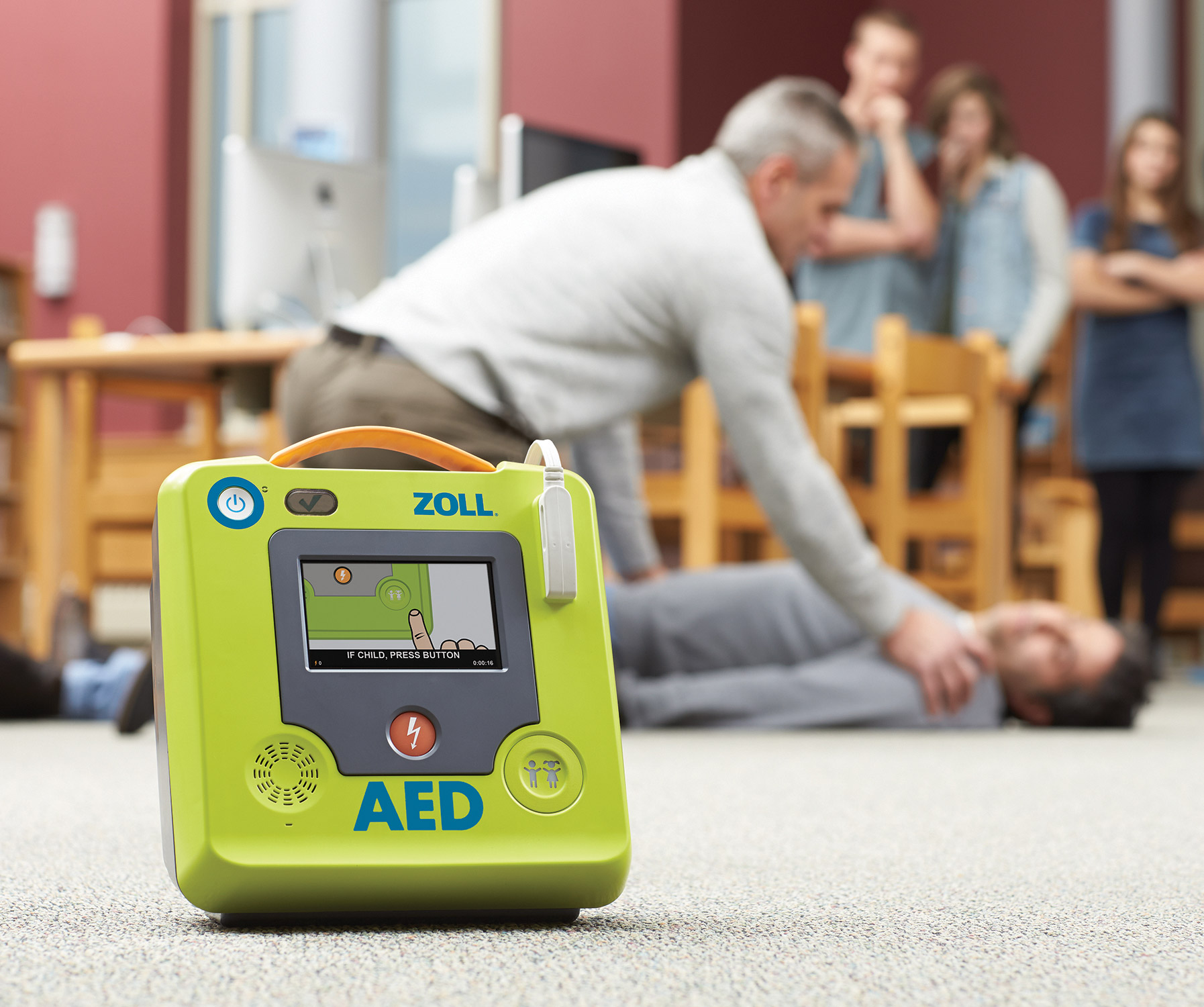
Featured AEDS
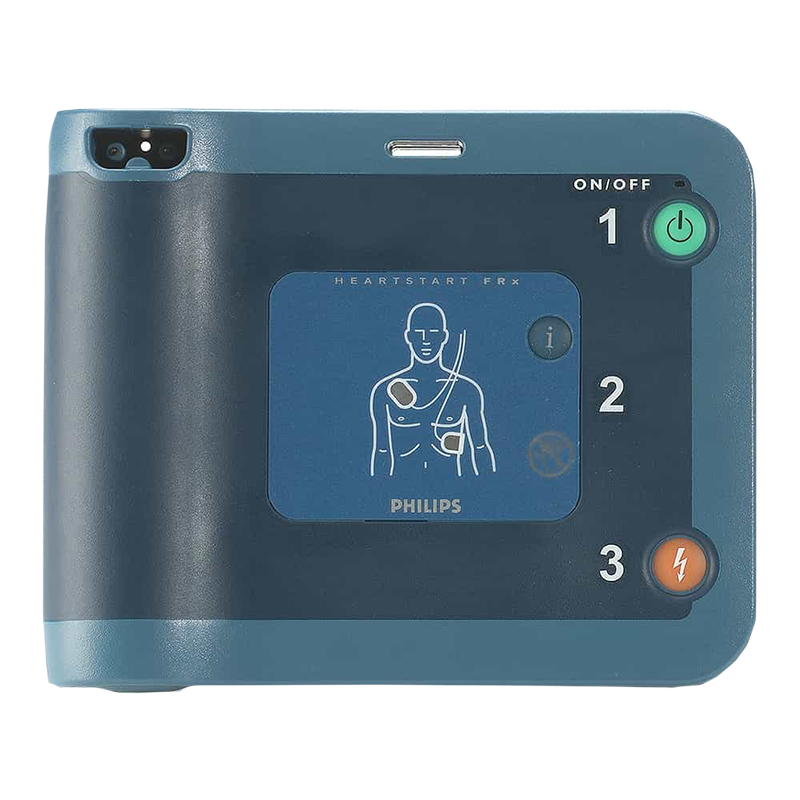
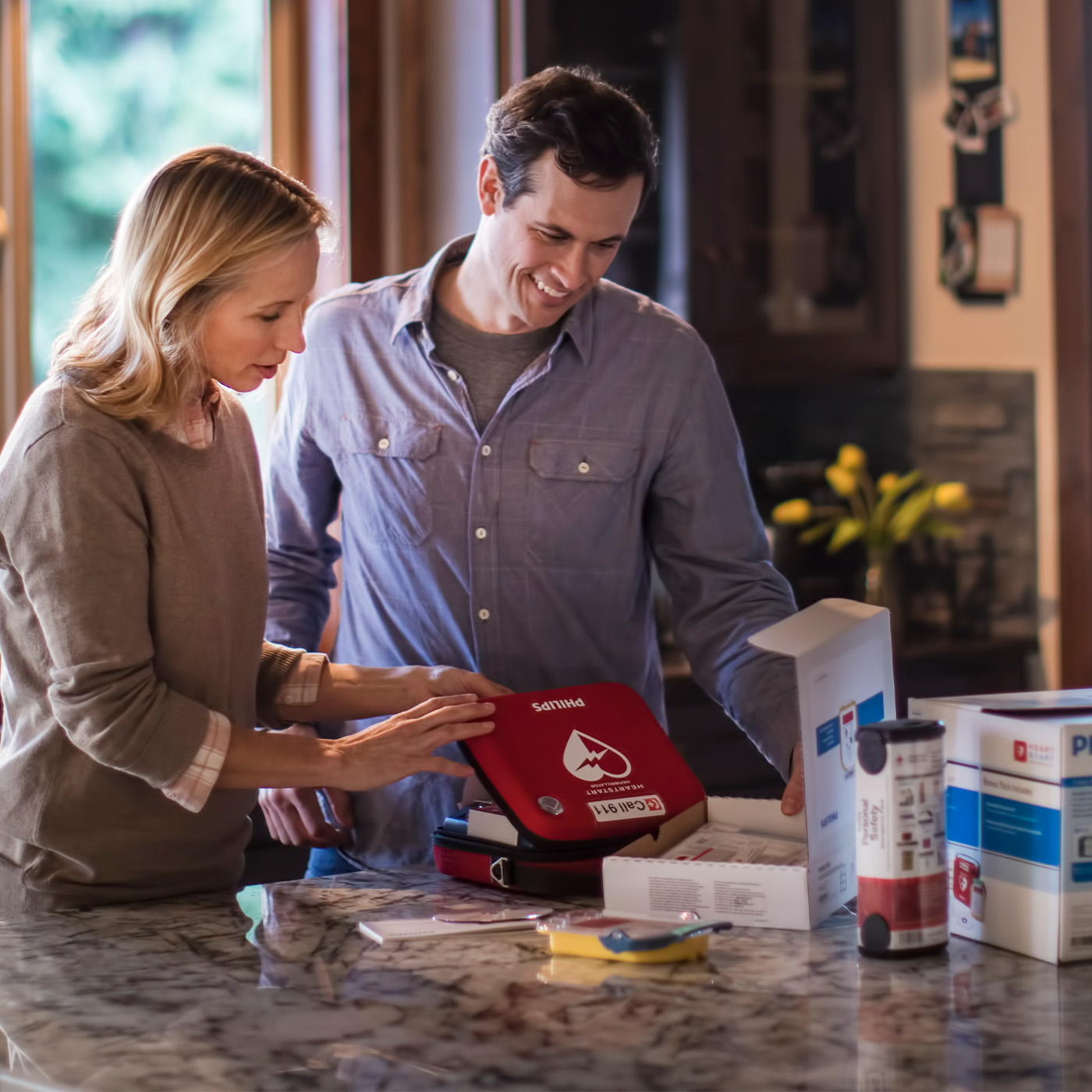
HEARTSTART FRX AED
The Philips FRx AED is a lightweight, tough, reliable device providing step-by-step voice instructions, CPR guidance and SMART biphasic shock technology. Optional pediatric key not included. The FRx is designed for ease-of-use and longevity
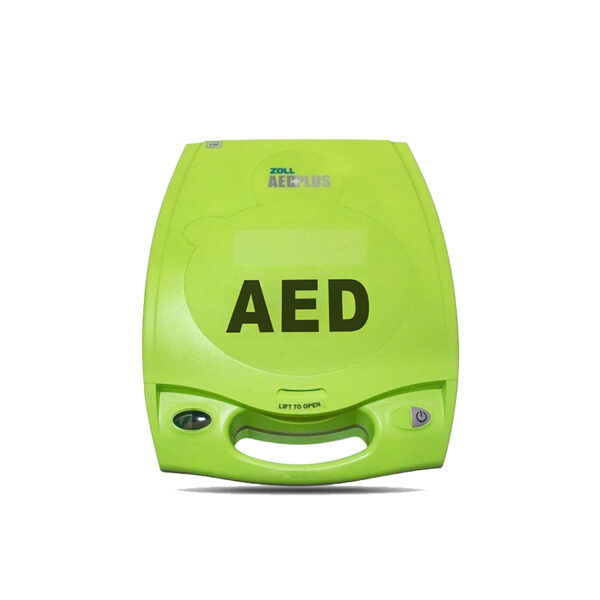
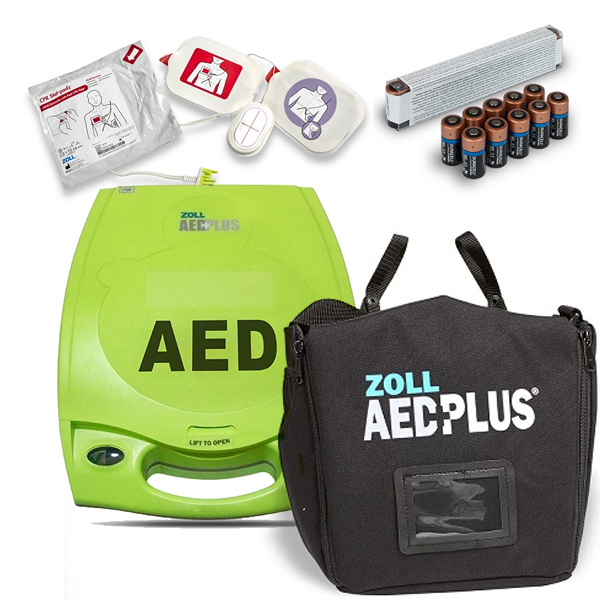
ZOLL AED PLUS
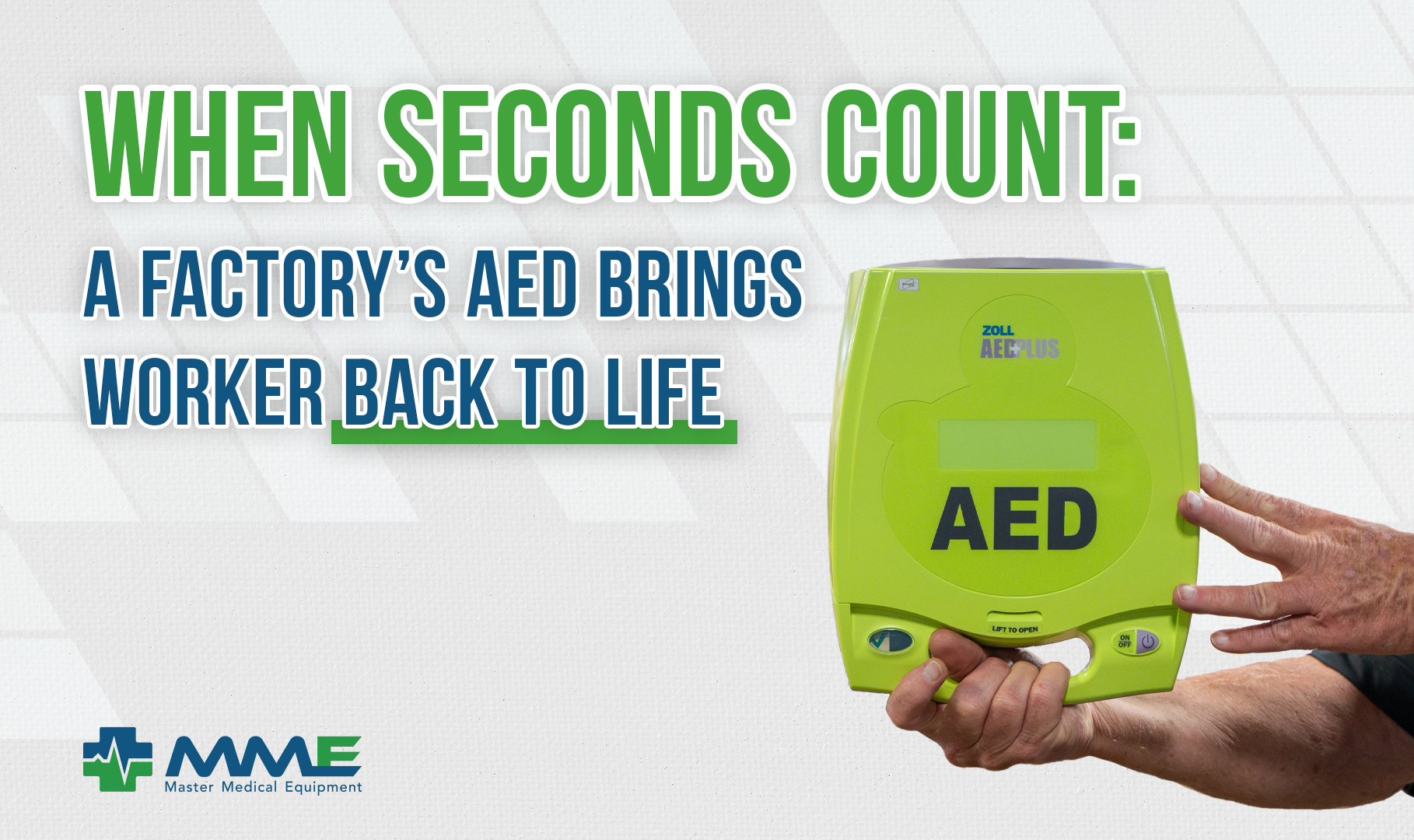
The ZOLL AED Plus sets a new standard for ease of use in emergency situations, delivering voice, text, and visual prompts alongside real-time CPR feedback. The AED Plus supports rescuers with Real CPR Help®, a robust design, and low ten-year cost of ownership.
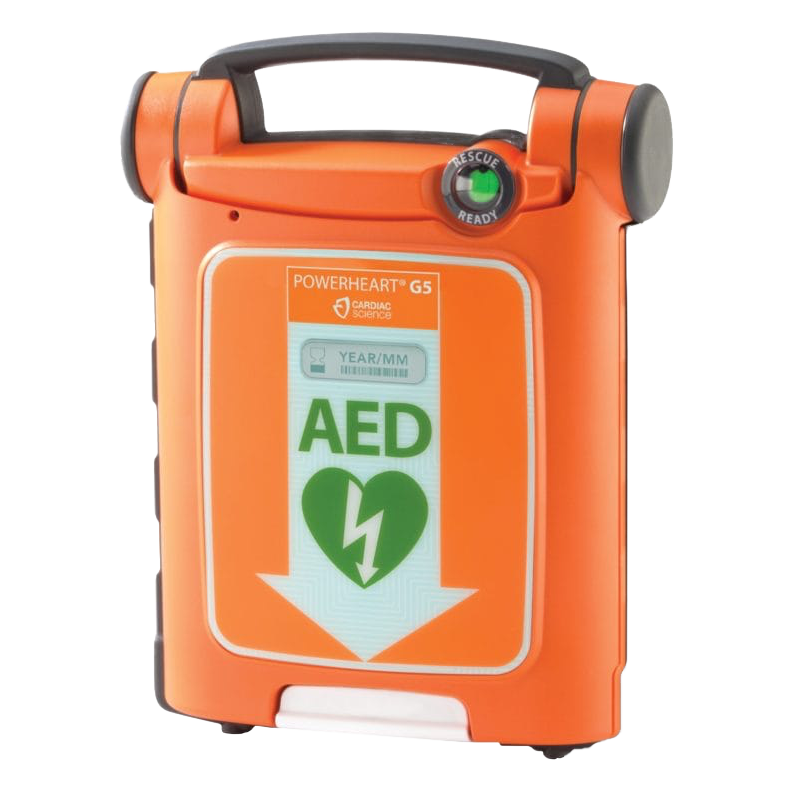
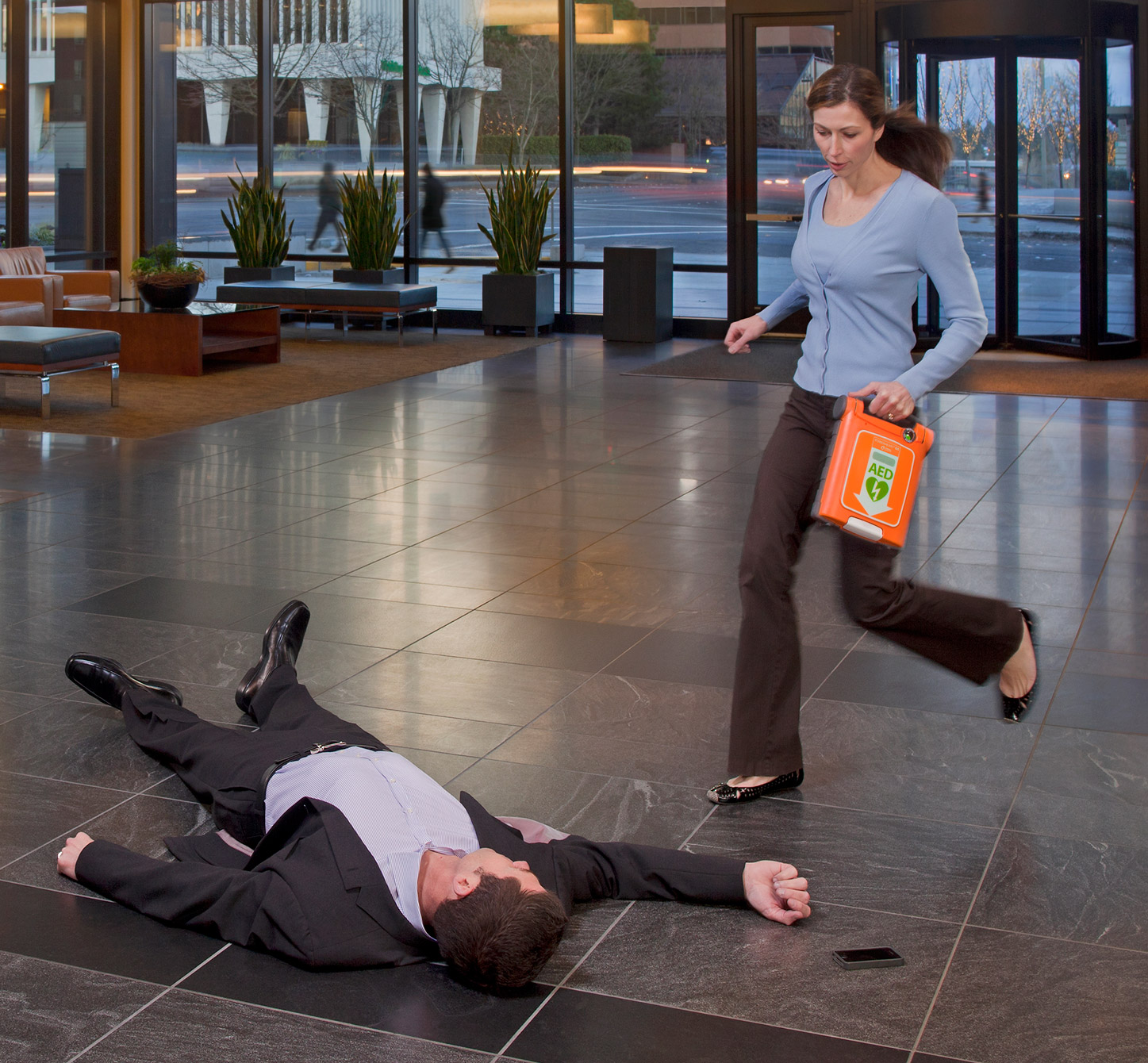
POWERHEART G5 AED
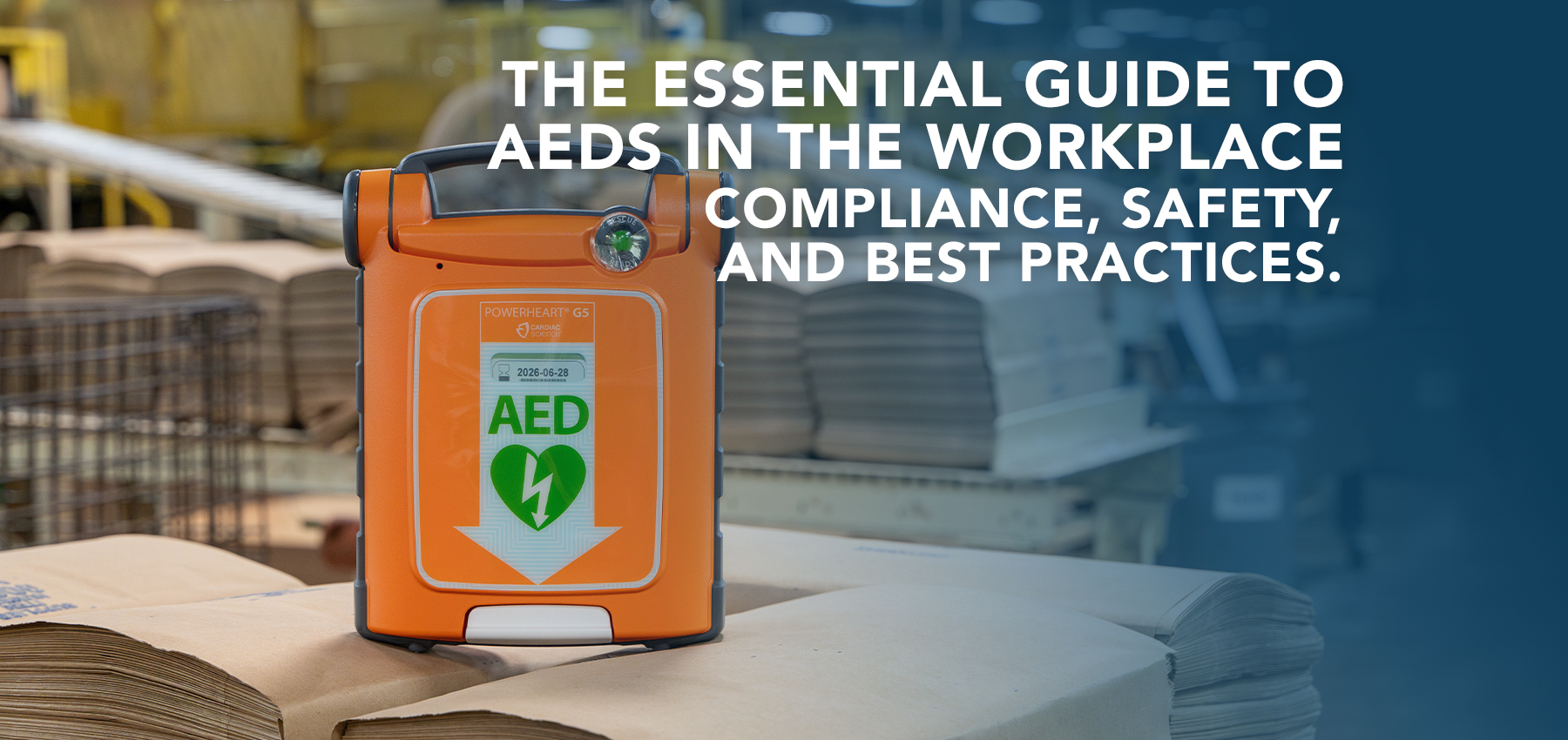
The Powerheart G5 AED from Cardiac Science boasts user-friendly features like dual-language functionality, clear voice and texts instructions, and variable escalating energy. The G5’s rugged reliability and smart technology ensures readiness, all backed by an 8-year warranty.
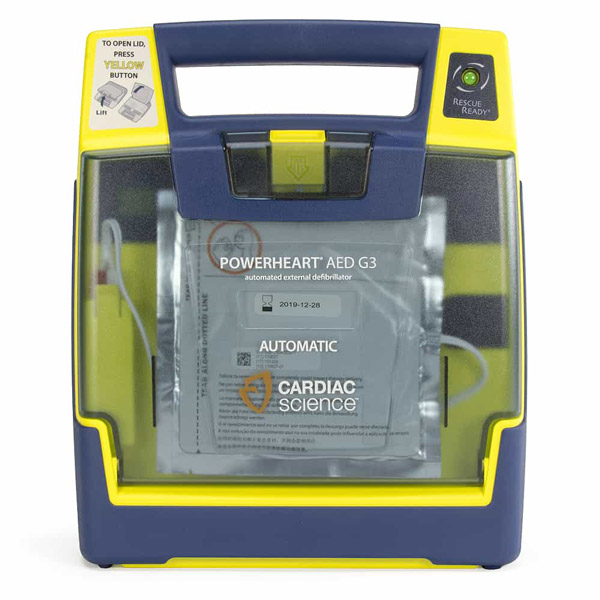
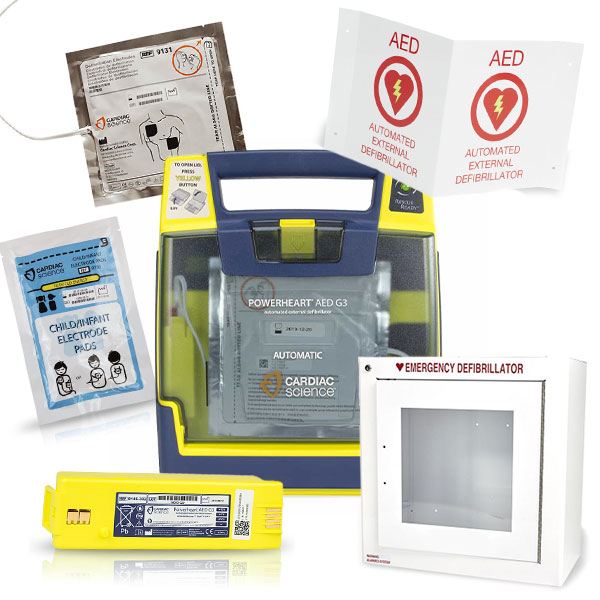
POWERHEART G3 AED
The Cardiac Science PowerHeart G3 AED, available in semi-automatic or fully automatic models, is equipped with STAR® biphasic waveform, voice and text prompts, and status indicators. The G3 is designed for clarity during critical moments.
Frequently Asked Questions about AEDs in the School
Does my school require an AED?
Some states have mandatory laws for schools and universities, requiring AED placement and widespread training. Other states leave it up to the school system’s discretion. Here are the states with some level of requirement for AEDs in schools (whether public or private, school or university): [image]Even if your state does not require it, keeping AEDs near classrooms, cafeterias, playgrounds, and gymnasiums can be a life-saving measure. SCA is the leading cause of death on school campuses, affecting between 7,000 to 23,000 youth a year according to the American Heart Association.
What’s the best AED for my School?
For schools, we recommend the Zoll AED Plus, Cardiac Science G5, or the Philips FRx AED. Our AED School Packages are designed with any size school in mind and is a comprehensive package with everything you need to install the AED in your facility. The price of a new unit is an investment, but the industry-leading warranty, long lifetime on pads, and four-year battery life means the low cost-of-ownership pays off quickly.
How many AEDs should my school have?
For every minute that passes after an SCA without a defibrillating shock, survival odds decrease by 10%. Because time is so precious, AEDs should be at most three minutes from any given location in your school. The exact number of AEDs in a school facility depends on several factors, including the shape and layout of your floorplan and how many buildings are on premises. A good rule of thumb is to keep at least one AED per building, with at least one AED per floor. On many school campuses with multiple buildings, libraries, athletic facilities, and event centers, one AED is just not enough. Time how long it takes to retrieve the AED from different locations in your school. If the time between emergency and deployment is more than three minutes, you should invest in more AEDs.
How can I afford an AED?
AED costs are a barrier for many schools. However, studies show keeping an AED on campus can improve survival rates by over 7x, saving thousands of children’s lives every year. Strategies for funding the purchase of AEDs for your campus include:
- Pursue grants from local children’s safety organizations or Heart Health organizations.
- There are many foundations around the U.S. whose primary focus is helping schools and youth athletic programs afford AEDs and teach CPR
- Look for help from local Rotary Clubs, many of which make tangible local investments in schools
- Partner with local retail stores and set up a donation program at checkout
- Many local health systems/hospitals help fund school AED programs
- Hold a local fundraising event, and teach the importance of CPR and quick response in a cardiac emergency
What maintenance does an AED require?
To ensure your AED is working and ready to save a life, the AED must be stored and maintained properly. Many AEDs perform regular self-checks and will signal when something is wrong. Check on your AED monthly and keep a record of annual maintenance, self-check history, and expiration dates for essential components.Send your AEDs to a biomedical service provider like ReNew Biomedical for an annual Preventative Maintenance check-up. Trained and certified technicians will clean your device, ensure it passes all tests, and alert you to any needed repairs or issues.